

The hpad Platform
A structured foundation for enterprise knowledge, reasoning, and AI-driven decision support
A platform for enterprise reasoning
Enterprise AI
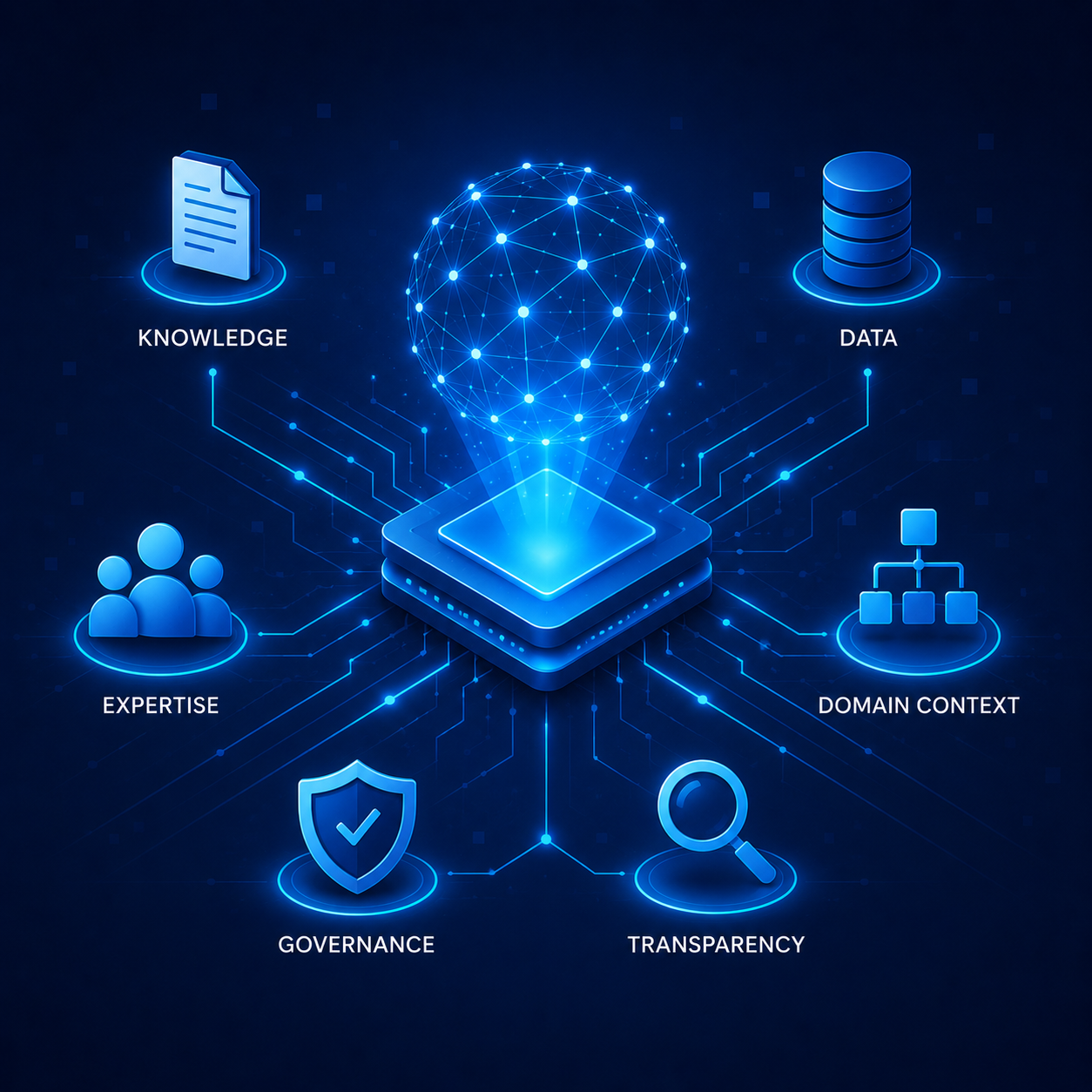
The hpad platform is designed to support how enterprises actually make decisions by combining structured knowledge, domain context, and expert reasoning.
Unlike conventional AI systems that operate on generalized data, hpad creates a shared enterprise foundation that connects concepts, relationships, logic, and context across the organization. This foundation enables AI companions to support decisions that are aligned, consistent, and traceable, while remaining transparent and governed through continuous expert validation.
The hpad platform is designed to support how enterprises actually make decisions by combining structured knowledge, domain context, and expert reasoning.
Unlike conventional AI systems that operate on generalized data, hpad creates a shared enterprise foundation that connects concepts, relationships, logic, and context across the organization. This foundation enables AI companions to support decisions that are aligned, consistent, and traceable, while remaining transparent and governed through continuous expert validation.
Overview
The hpad Platform at a glance
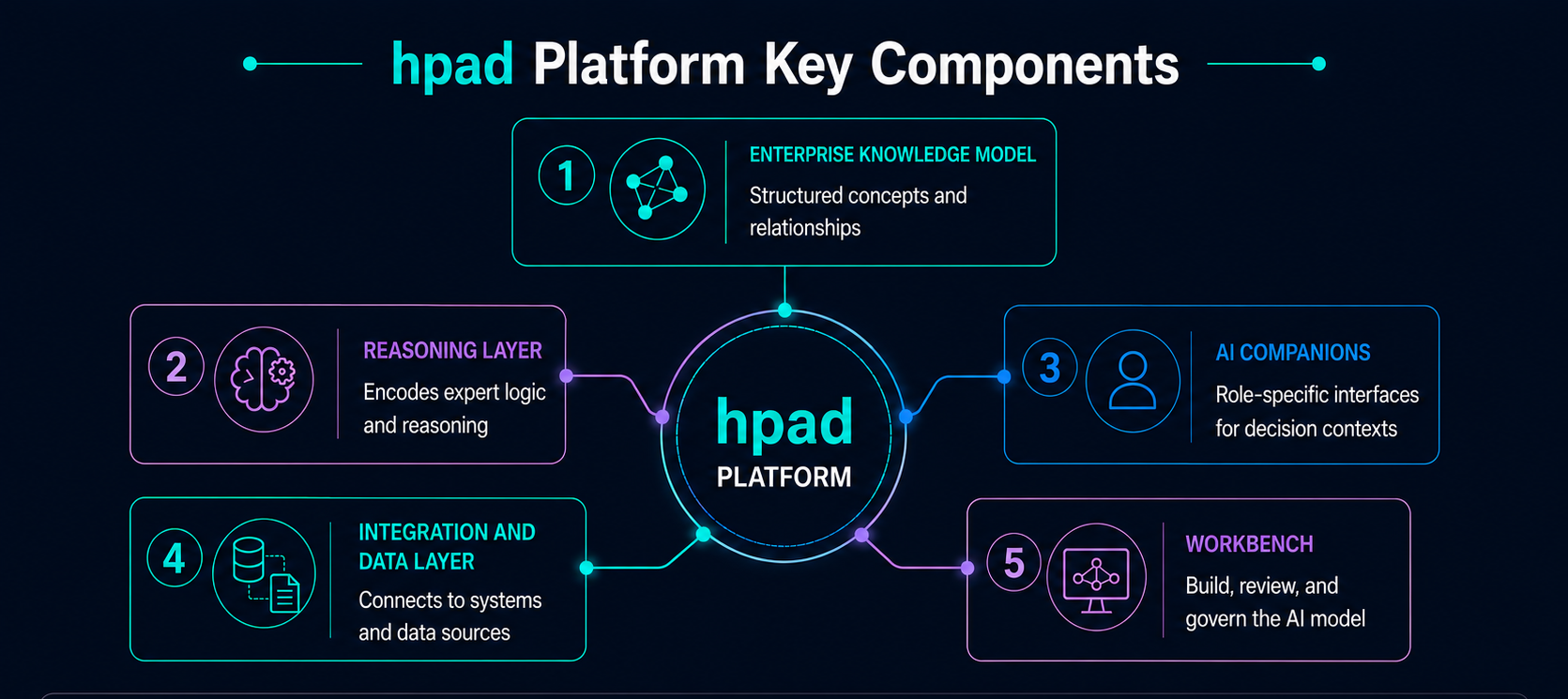
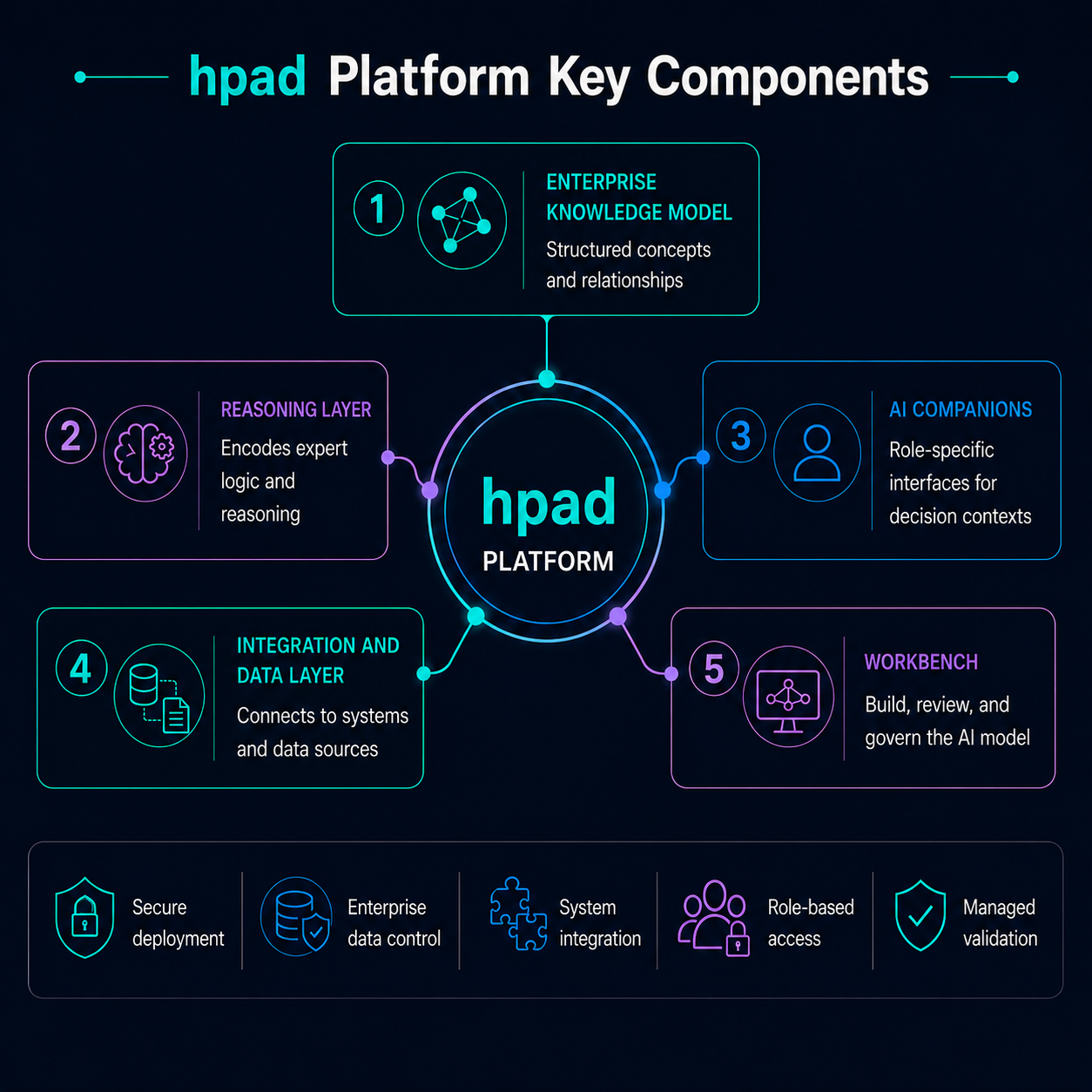
The hpad platform consists of five core components that work together to transform enterprise knowledge into decision support, while enabling continuous validation and refinement.
01
Enterprise knowledge model
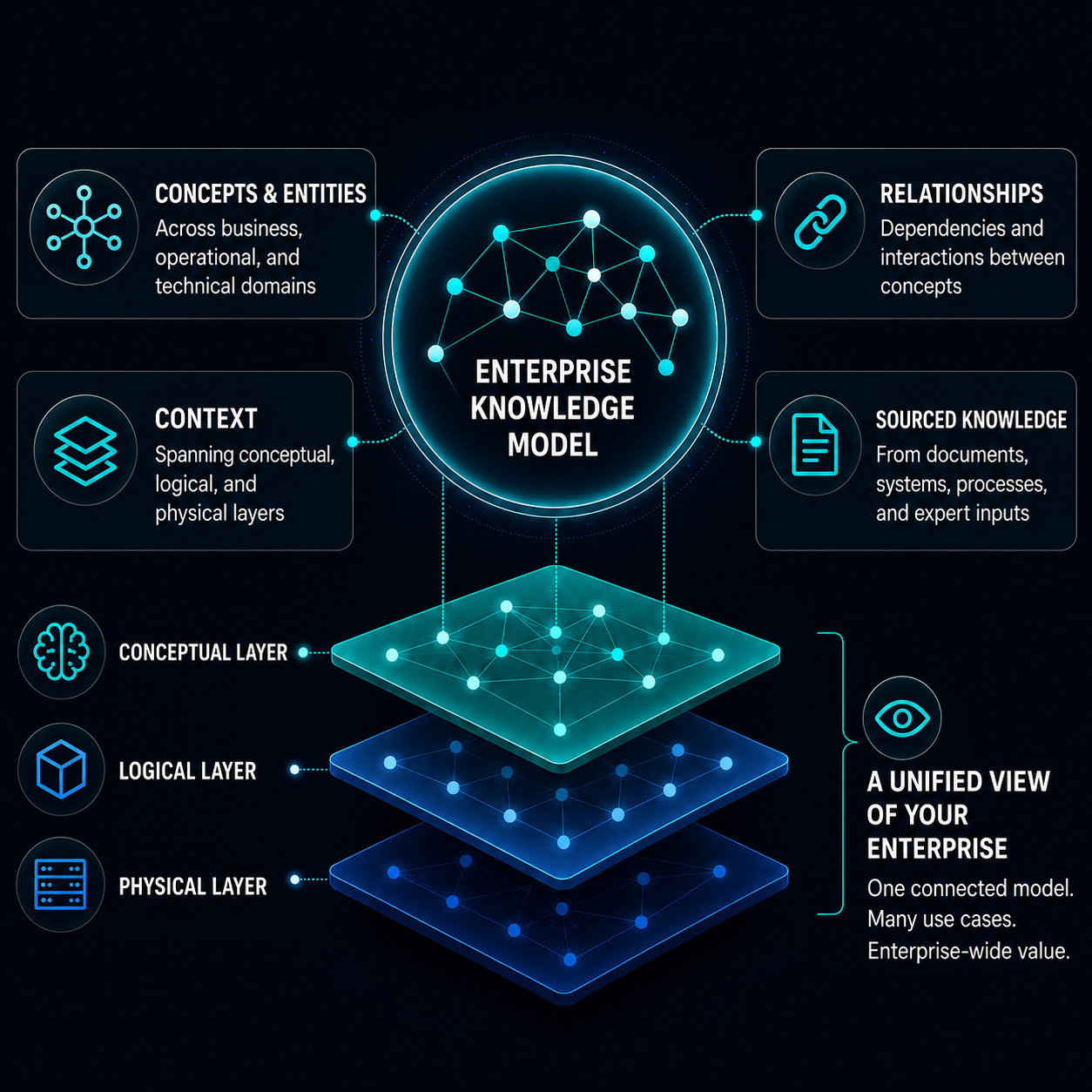
The enterprise knowledge model is the core of the platform. It organizes knowledge into a structured representation of the enterprise.
It includes:
Concepts and entities across business, operational, and technical domains
Relationships between concepts, including dependencies and interactions
Context spanning conceptual, logical, and physical layers
Knowledge derived from documents, systems, processes, and expert inputs
This model provides a unified view of the enterprise that can be reused across multiple use cases.
It includes:
Concepts and entities across business, operational, and technical domains
Relationships between concepts, including dependencies and interactions
Context spanning conceptual, logical, and physical layers
Knowledge derived from documents, systems, processes, and expert inputs
This model provides a unified view of the enterprise that can be reused across multiple use cases.
02
Reasoning Layer
The reasoning layer encodes how experts interpret information and make decisions.
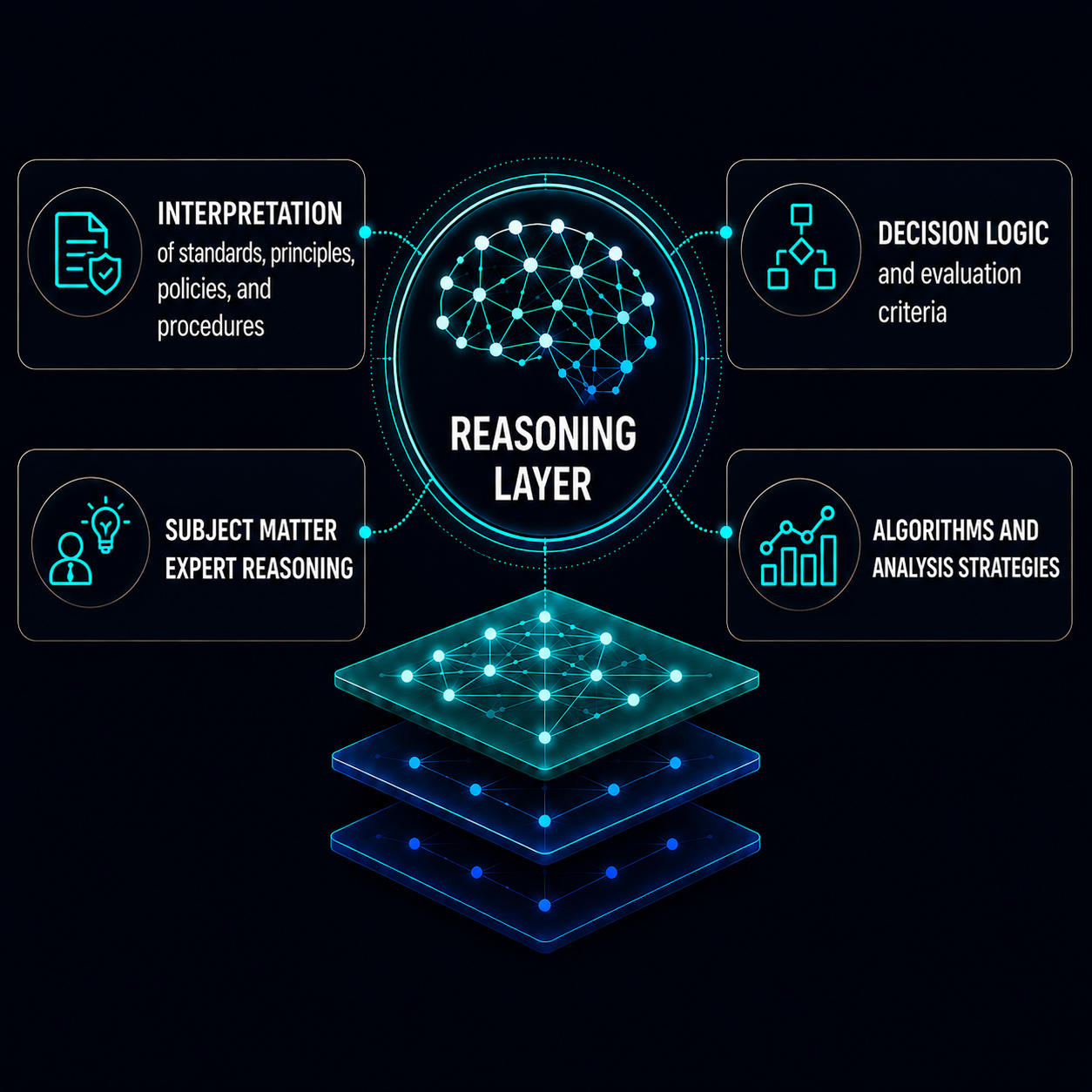
It incorporates:
Interpretation of standards, principles, policies, and procedures
Decision logic and evaluation criteria
Cause-and-effect relationships
Contextual judgment and trade-offs
This allows the platform to support structured reasoning rather than simple retrieval or generation.
03
AI Companions
It incorporates:
Interpretation of standards, principles, policies, and procedures
Decision logic and evaluation criteria
Cause-and-effect relationships
Contextual judgment and trade-offs
This allows the platform to support structured reasoning rather than simple retrieval or generation.
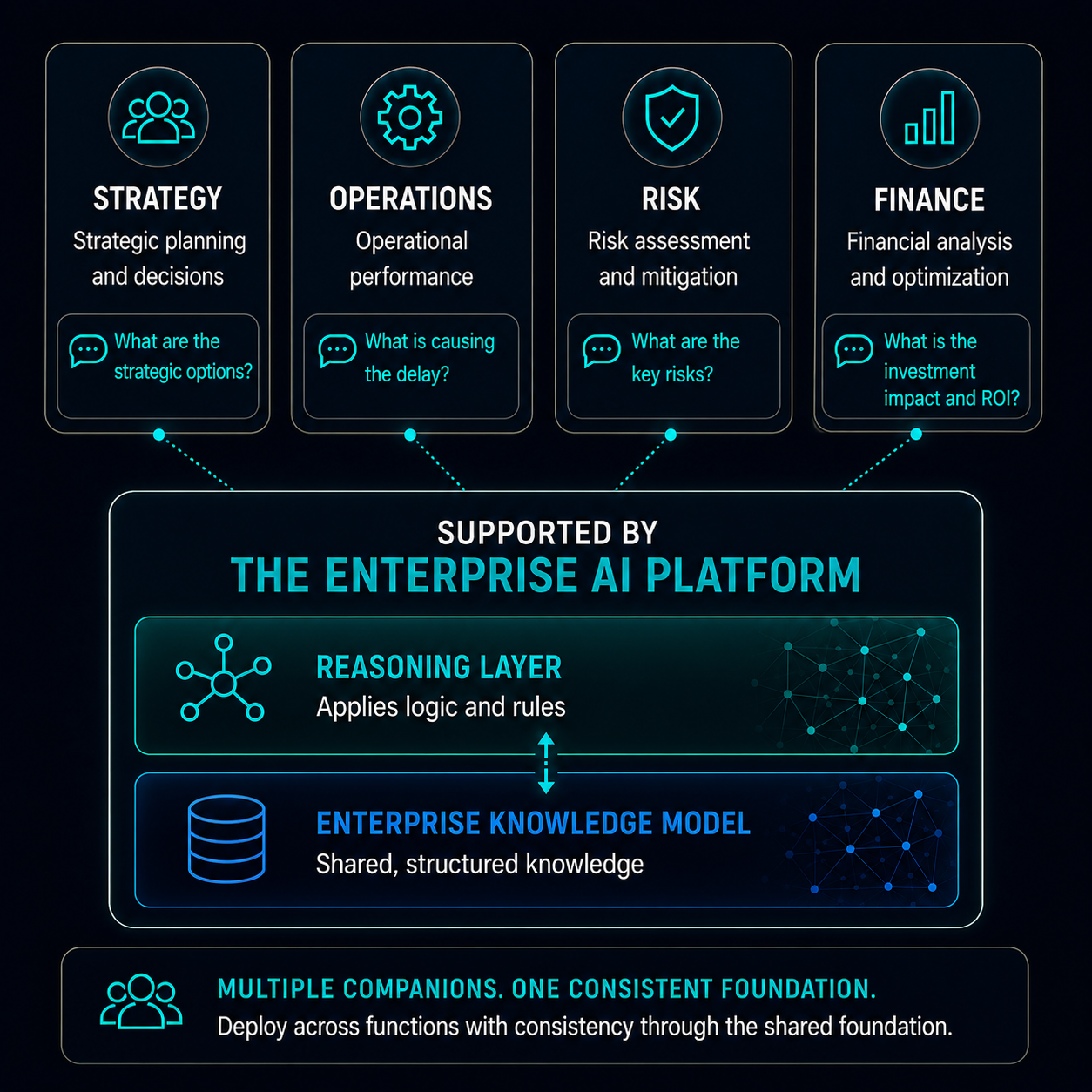
AI companions are role-specific interfaces that enable users to interact with the platform.
Each companion:
Uses the shared enterprise knowledge model
Applies the reasoning layer to specific contexts
Supports domain-specific questions, analysis, and outputs
Provides responses grounded in enterprise knowledge and logic
Multiple companions can be deployed across functions while maintaining consistency through the shared foundation.
Each companion:
Uses the shared enterprise knowledge model
Applies the reasoning layer to specific contexts
Supports domain-specific questions, analysis, and outputs
Provides responses grounded in enterprise knowledge and logic
Multiple companions can be deployed across functions while maintaining consistency through the shared foundation.
04
Integration and Data Layer
The platform integrates with enterprise systems, data sources, and document repositories.
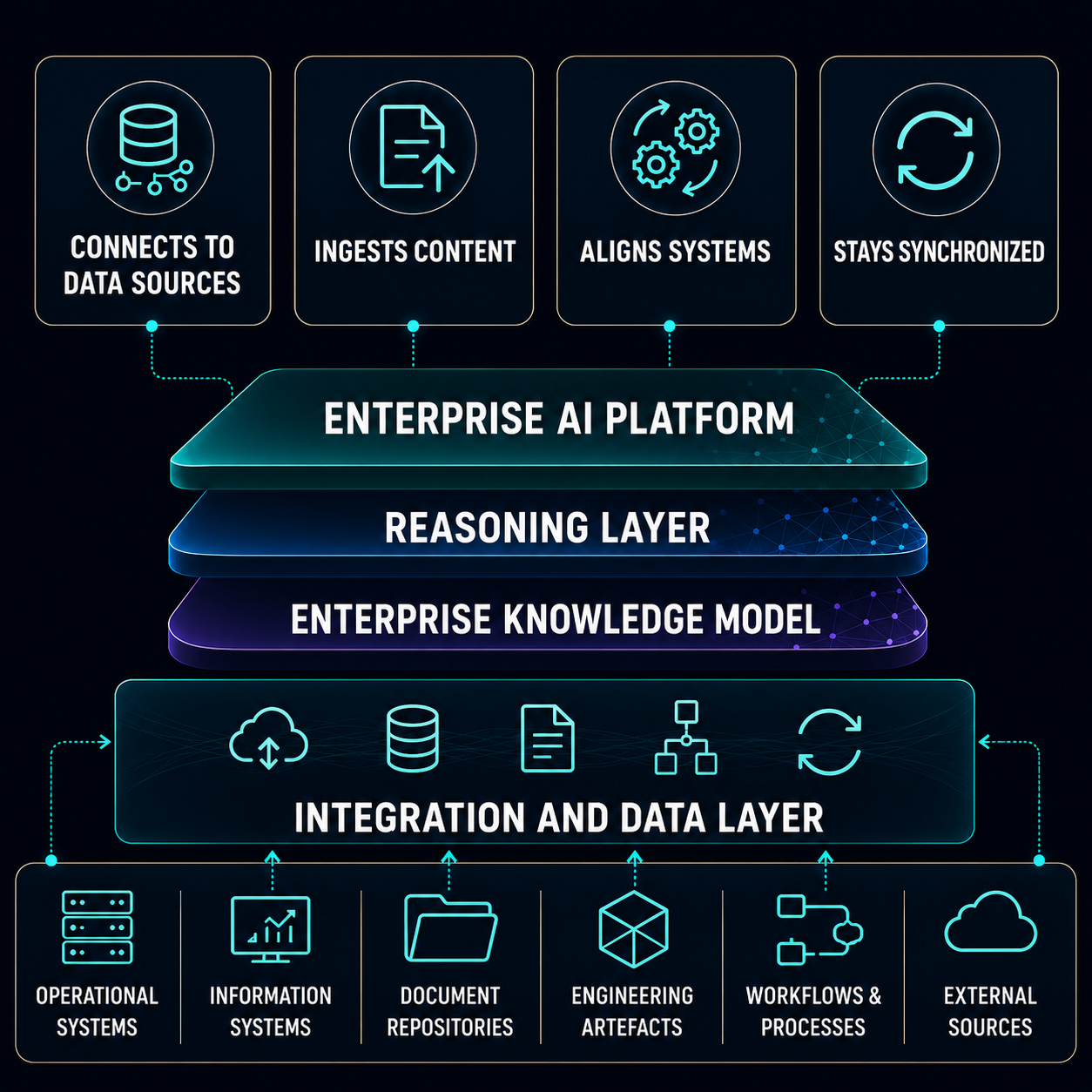
This layer:
Connects to structured and unstructured data sources
Supports ingestion of documents, artefacts, and workflows
Enables alignment with operational and informational systems
Keeps the platform synchronized with evolving enterprise knowledge
This layer:
Connects to structured and unstructured data sources
Supports ingestion of documents, artefacts, and workflows
Enables alignment with operational and informational systems
Keeps the platform synchronized with evolving enterprise knowledge
05
Workbench
The Workbench is the environment used to build, review, and govern the enterprise AI model.
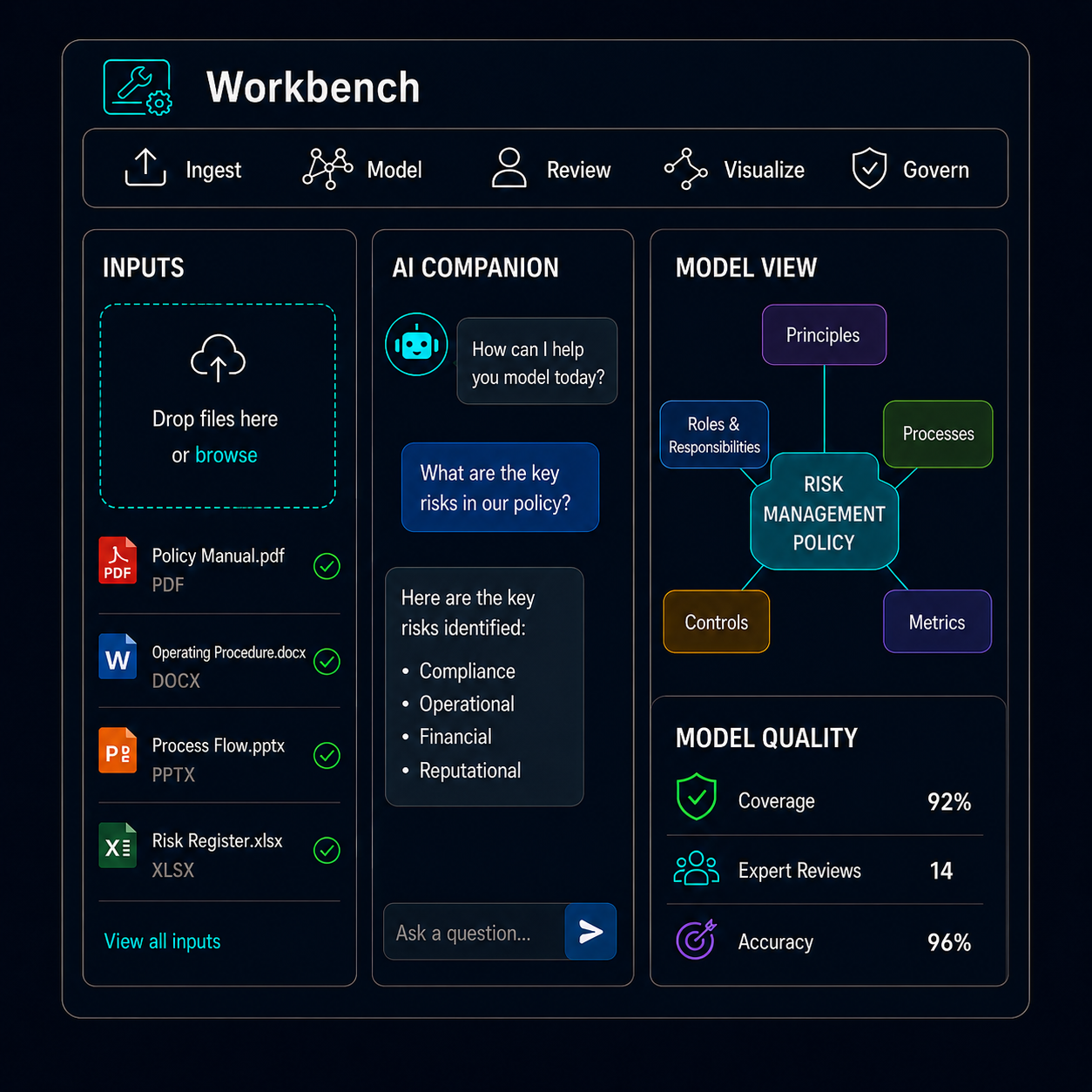
It enables organizations to:
Submit documents and inputs to teach the AI about the enterprise
Interact with the AI during modeling through a built-in companion
Review and validate the knowledge captured in the model with subject matter experts
View the model in structured and visual forms to understand relationships and context
Refine and correct the model to ensure accuracy and alignment
It enables organizations to:
Submit documents and inputs to teach the AI about the enterprise
Interact with the AI during modeling through a built-in companion
Review and validate the knowledge captured in the model with subject matter experts
View the model in structured and visual forms to understand relationships and context
Refine and correct the model to ensure accuracy and alignment
The Workbench ensures that the enterprise AI model remains transparent, controllable, and continuously validated by domain experts.
From knowledge to decisions
How the Platform works together
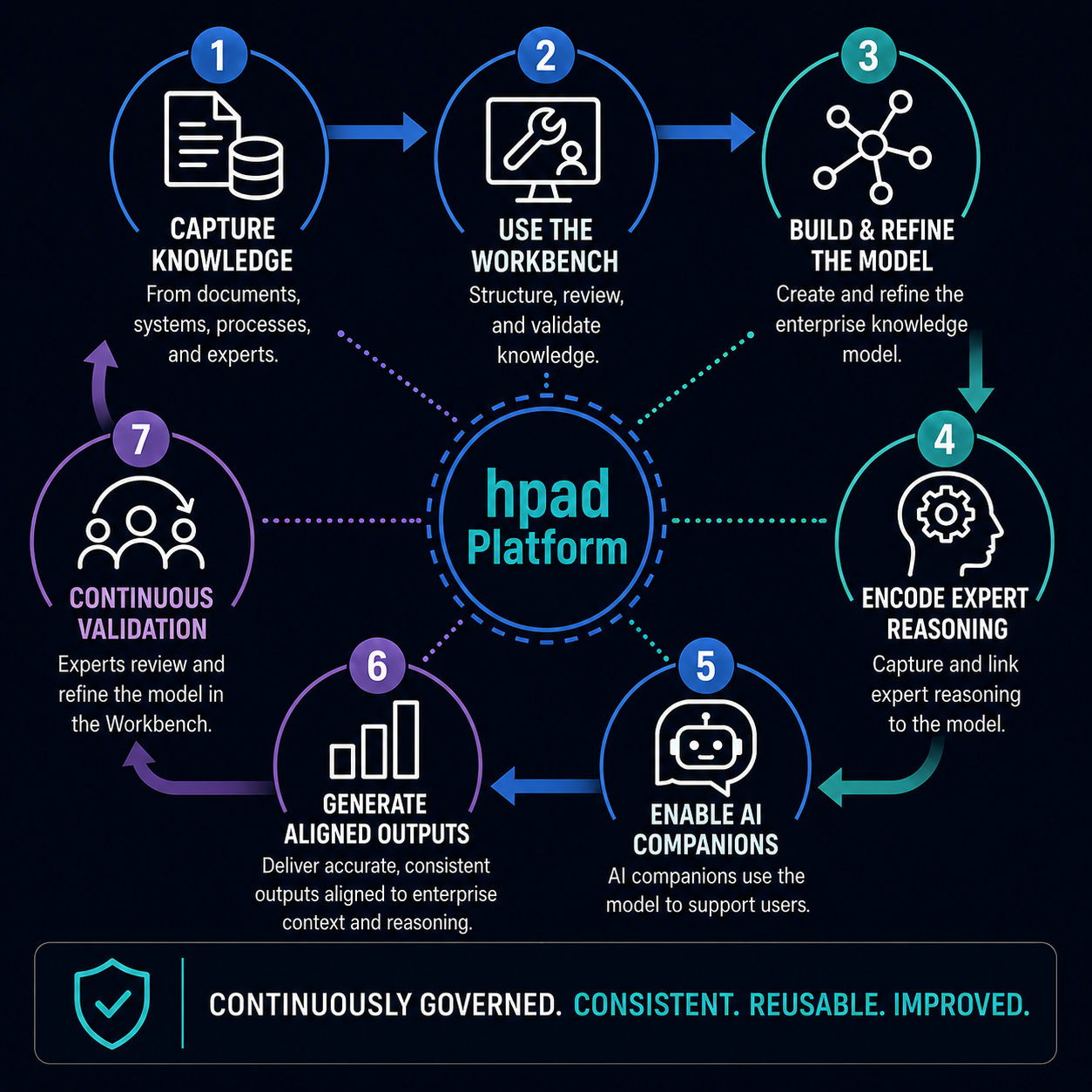
Knowledge is captured from documents, systems, processes, and subject matter experts
The Workbench is used to structure, review, and validate this knowledge
The enterprise knowledge model is built and refined based on validated inputs
Expert reasoning is encoded and linked to the model
AI companions use this foundation to support user interactions
Outputs are generated with alignment to enterprise context and reasoning
Subject matter experts continuously review and refine the model through the Workbench
Knowledge is captured from documents, systems, processes, and subject matter experts
The Workbench is used to structure, review, and validate this knowledge
The enterprise knowledge model is built and refined based on validated inputs
Expert reasoning is encoded and linked to the model
AI companions use this foundation to support user interactions
Outputs are generated with alignment to enterprise context and reasoning
Subject matter experts continuously review and refine the model through the Workbench
This flow ensures that decision support is not only consistent and reusable, but also continuously governed and improved.
It operates:
Alongside systems of record such as ERP, control systems, and data platforms
Across systems of engagement, including user interfaces and workflows
As a unifying layer that connects enterprise knowledge, reasoning, and decision support
The Workbench provides a controlled environment for managing how enterprise knowledge is structured and validated, ensuring alignment across business, operational, and technical domains.
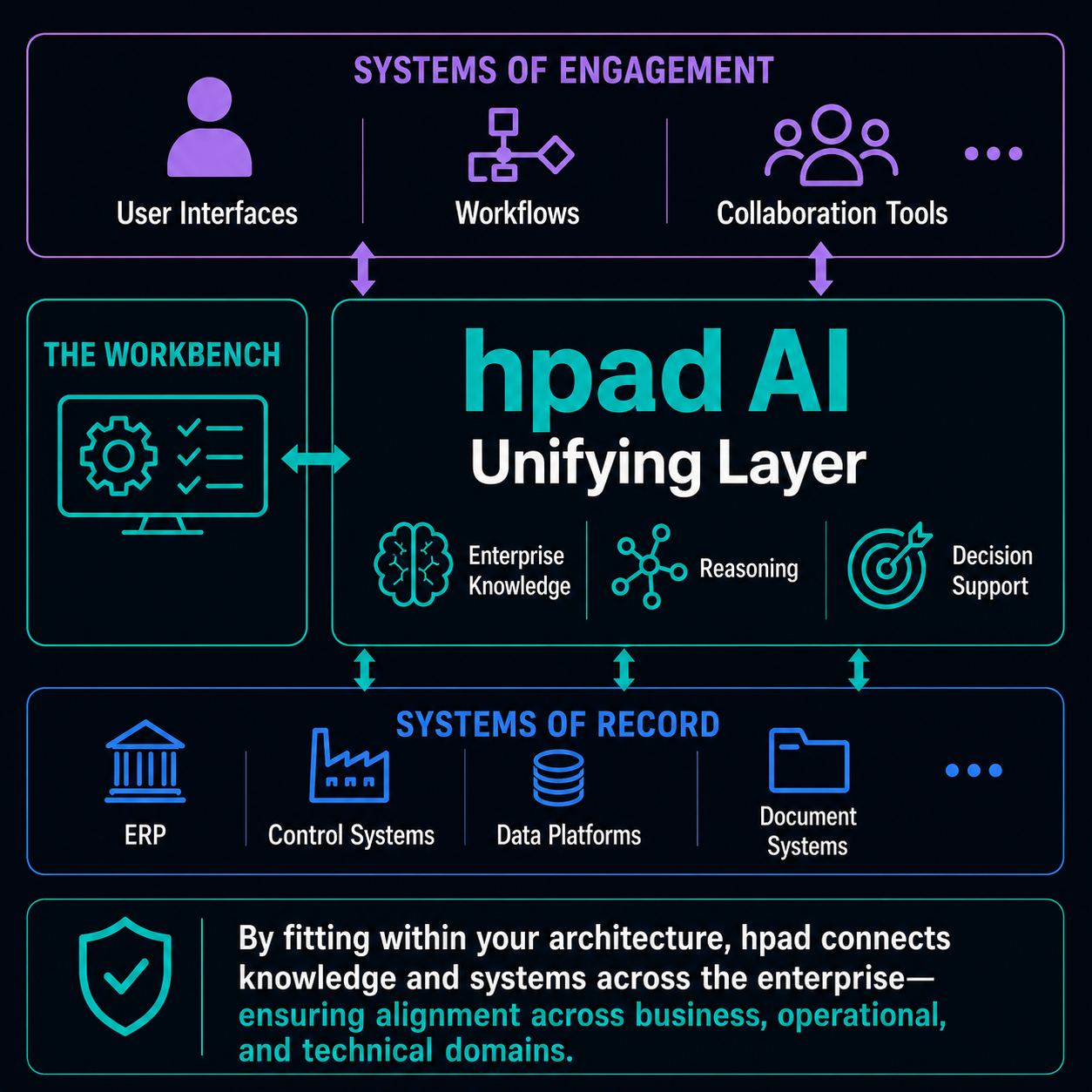
Position in the Enterprise Architecture
Designed for enterprise environments
The hpad platform is designed to fit within existing enterprise architectures rather than replace them.
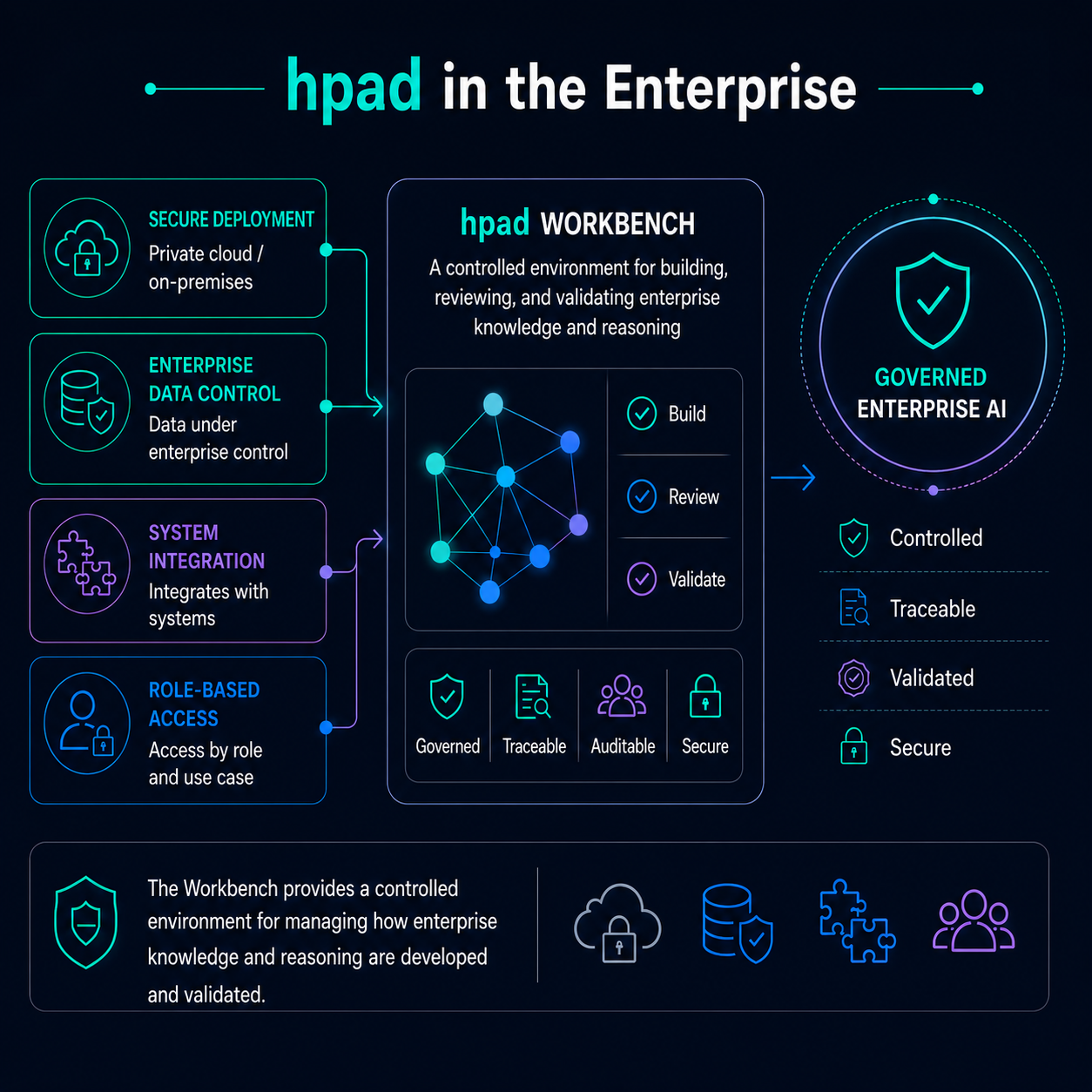
Deployment options include private cloud and on-premises environments
Data remains under enterprise control
Integration with existing systems and workflows is supported
Access can be configured by role and use case
The Workbench provides a controlled environment for managing how enterprise knowledge and reasoning are developed and validated.
Flexible and Secure Deployment
Deployment Model
hpad supports deployment models aligned to enterprise requirements.
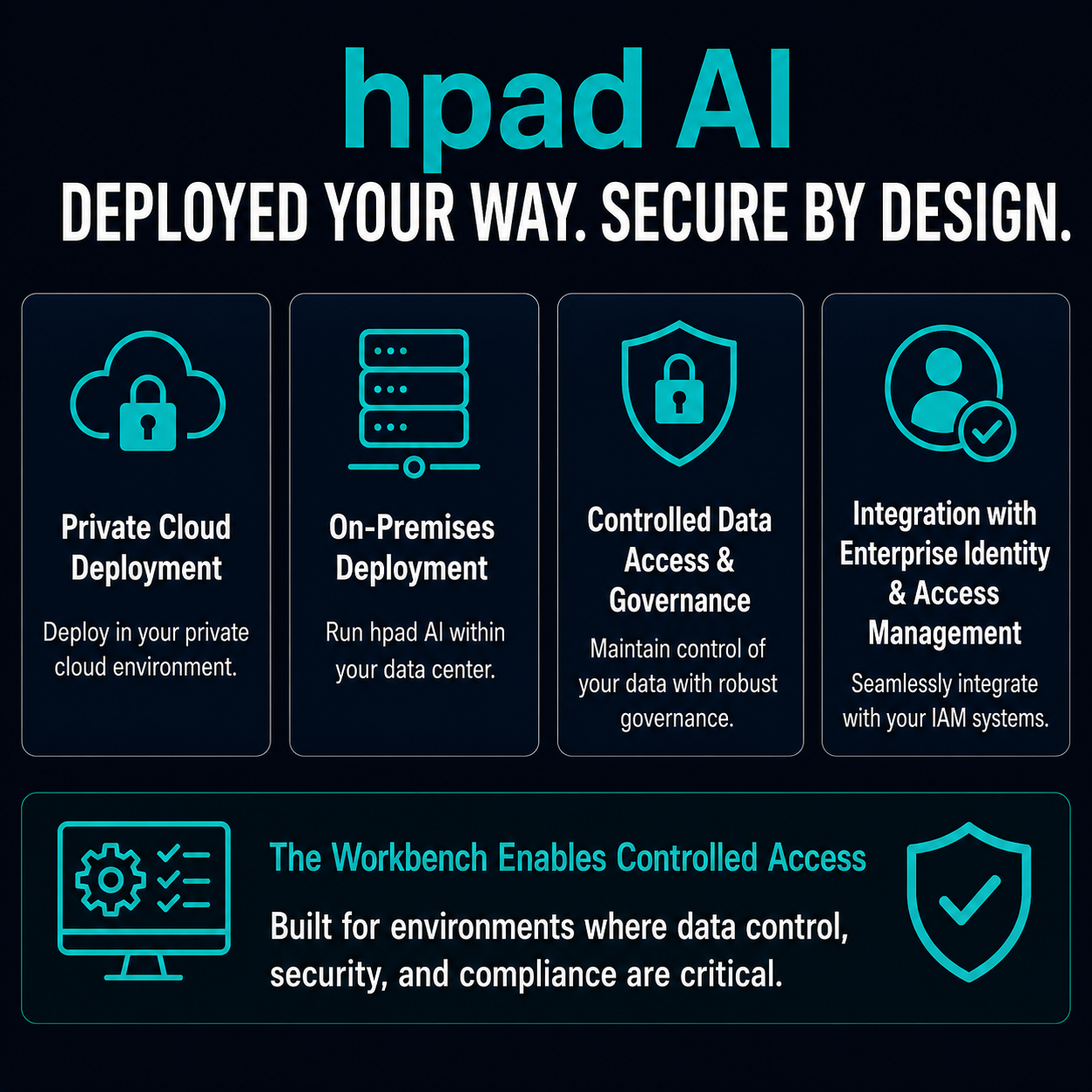
Private cloud deployment
On-premises deployment
Controlled data access and governance
Integration with enterprise identity and access management
The platform is designed for environments where data control, security, and compliance are critical, with the Workbench supporting controlled access to modeling and validation activities.
One platform, multiple solutions
Scalability across use cases
A single enterprise AI platform can support multiple AI companions and use cases.
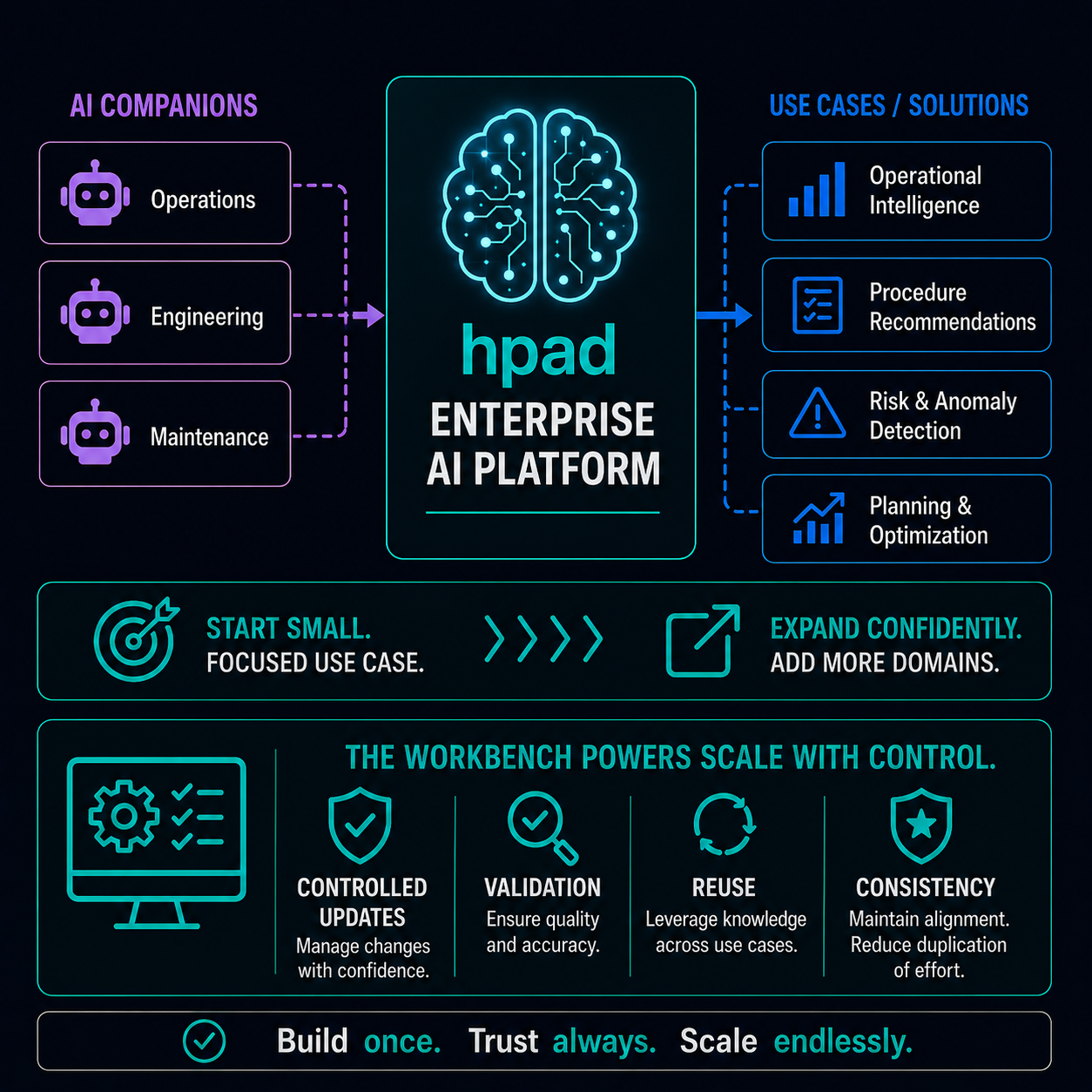
Organizations can start with a focused use case, then expand to additional domains without rebuilding the foundation. The Workbench supports this by enabling controlled updates, validation, and reuse of knowledge across use cases, ensuring consistency and reducing duplication of effort.
Built for traceability and control
Governance and Traceability
hpad is designed to support environments where decisions must be explainable and auditable
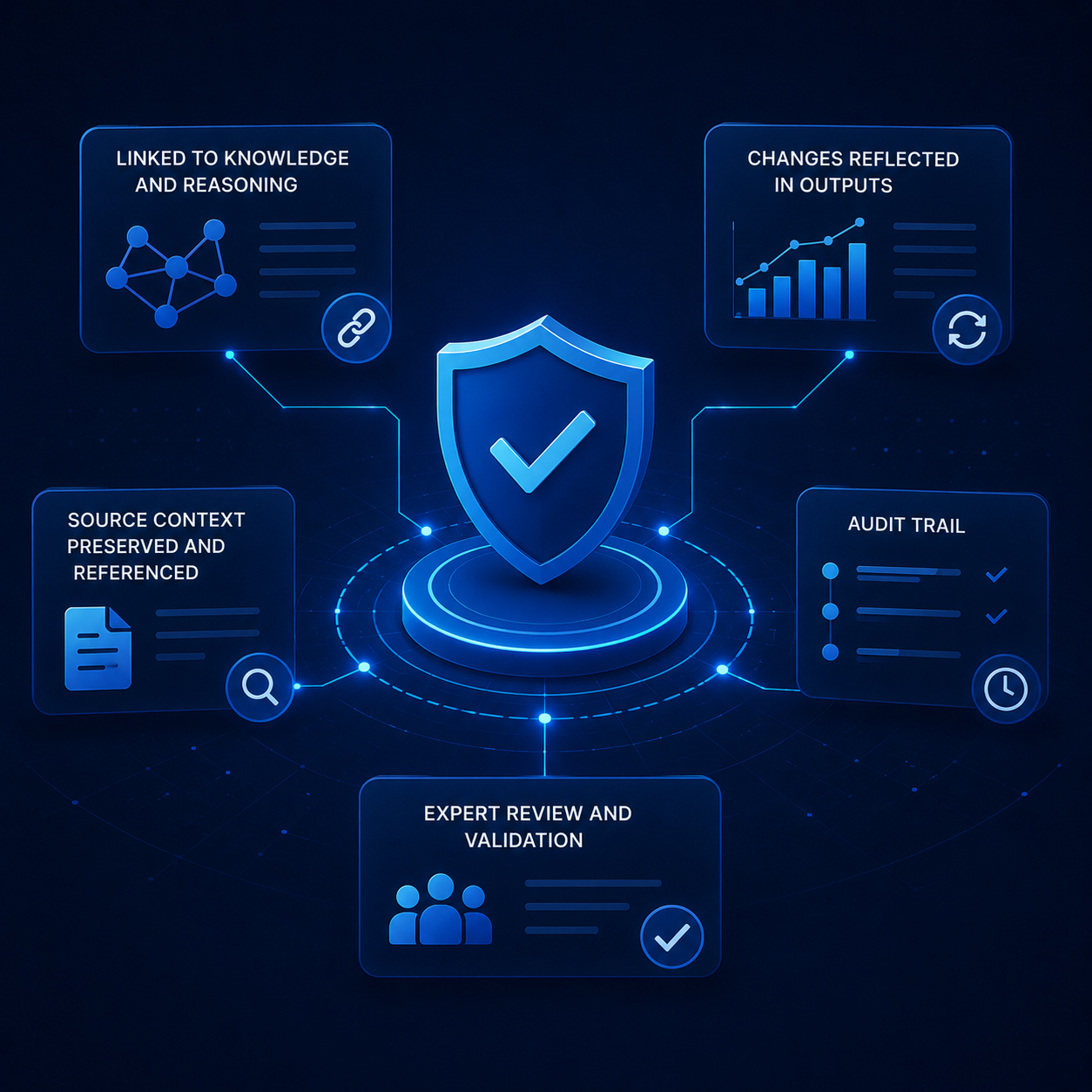
Outputs can be linked to underlying knowledge and reasoning
Source context can be preserved and referenced
Expert review and validation are integrated into the platform
Changes in knowledge are reflected in outputs
Outputs can be linked to underlying knowledge and reasoning
Source context can be preserved and referenced
Expert review and validation are integrated into the platform
Changes in knowledge are reflected in outputs
The Workbench plays a central role in governance by enabling subject matter experts to review, validate, and refine the enterprise AI model, ensuring that decision support remains accurate and aligned.
A platform that evolves with the enterprise
Continuous Evolution
The enterprise knowledge model and reasoning layer are continuously refined as the enterprise evolves.
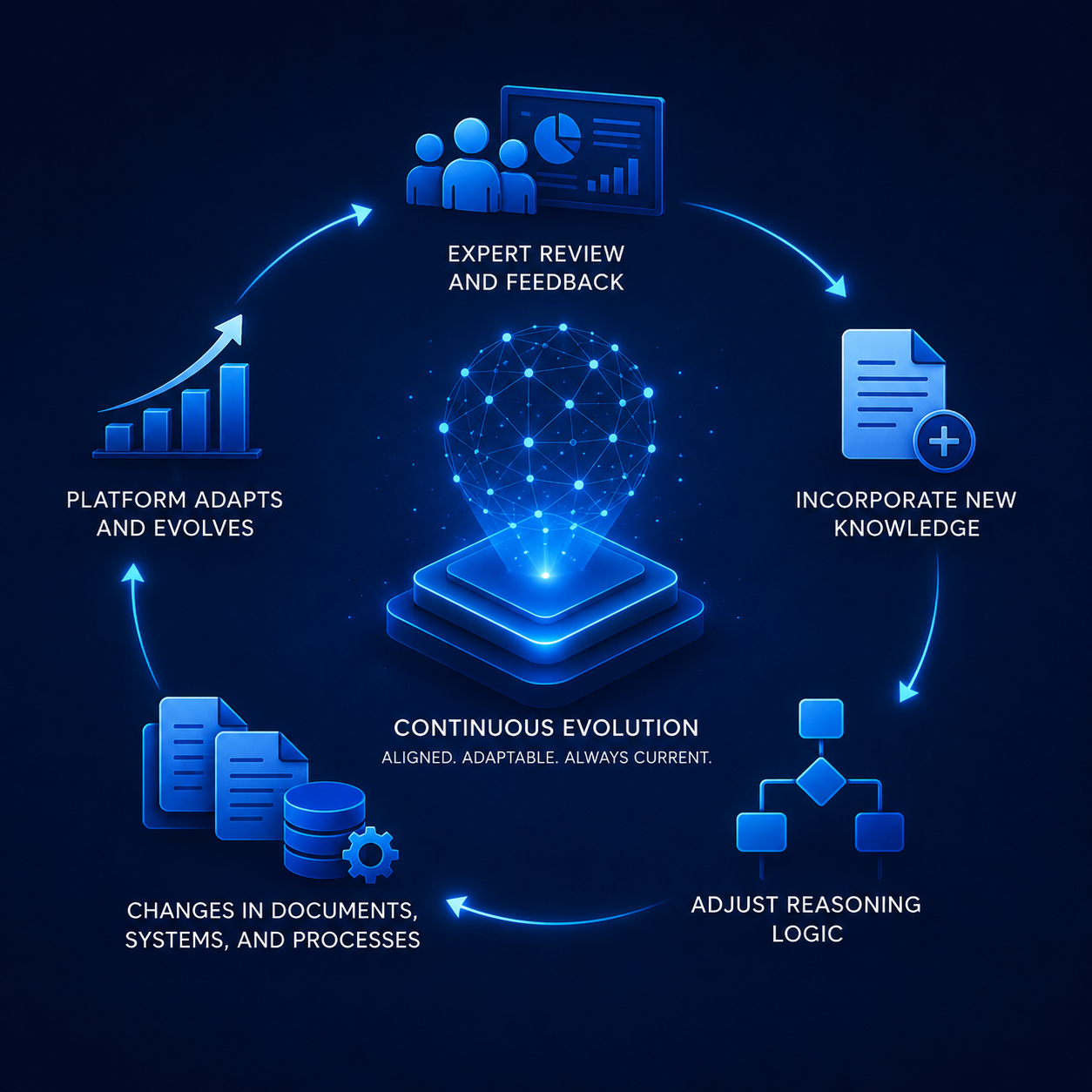
Subject matter experts use the Workbench to review outputs, incorporate new knowledge, and adjust reasoning logic. As documents, systems, and processes change, the platform adapts-ensuring that AI remains aligned with current enterprise reality rather than becoming outdated.
Build a foundation for enterprise AI that scales
The hpad platform provides a structured, reusable foundation for applying AI across the enterprise-connecting knowledge, reasoning, validation, and decision support in a way that reflects how organizations actually operate.