

hpad transforms enterprise knowledge into AI companions that support real decisions.
From enterprise knowledge to enterprise reasoning
Enterprise AI
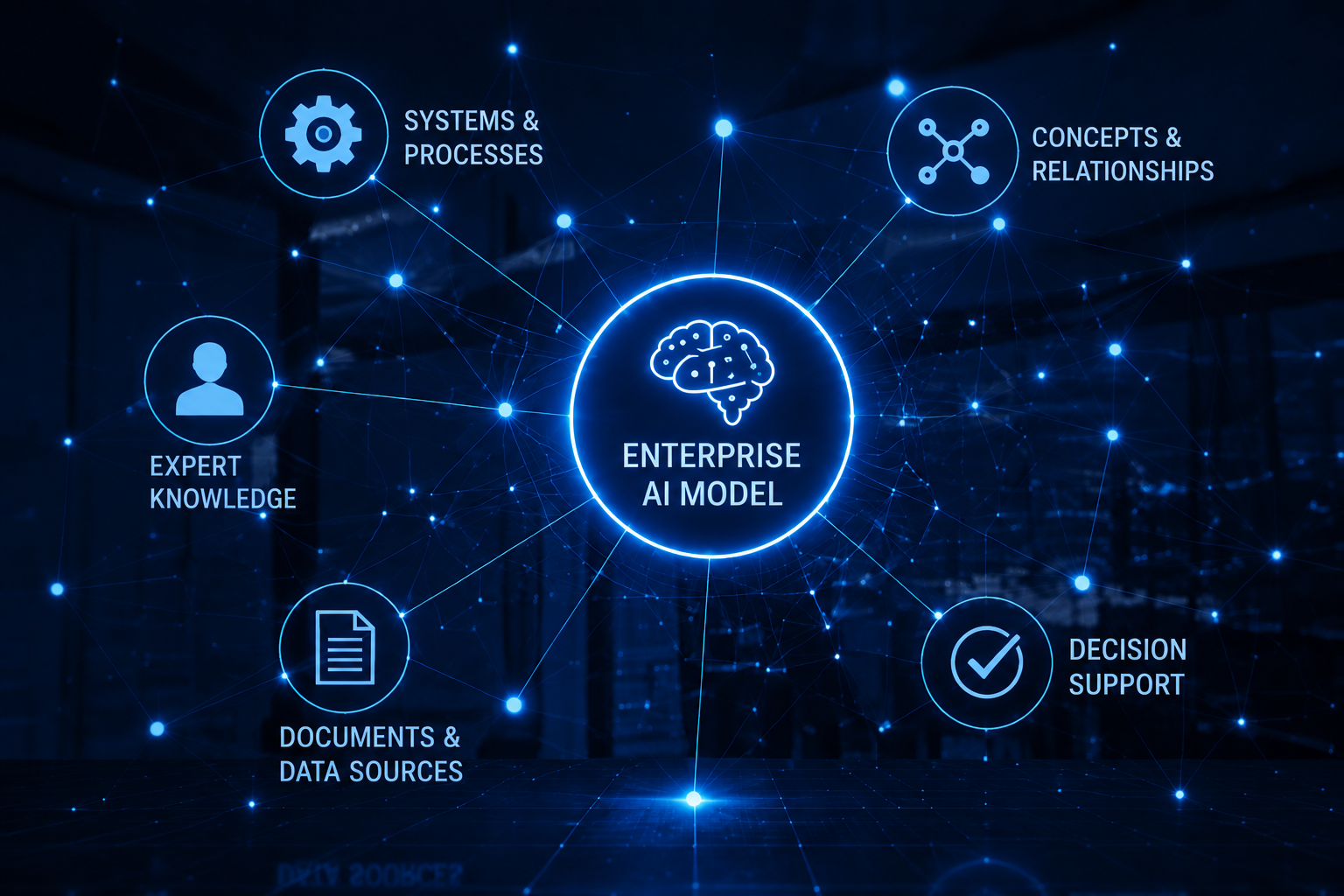
Traditional AI systems operate on generalized data and patterns. Enterprise decisions, however, depend on domain-specific knowledge, structured relationships, and expert judgment.
hpad addresses this gap by building an enterprise AI model that reflects how your organization actually works-how concepts relate, how systems interact, and how experts reason. This model is built, reviewed, and continuously refined through the Workbench, ensuring that it remains aligned with enterprise knowledge and practice. It becomes the foundation for AI companions that support decision-making in real operational contexts.
A structured approach to enterprise AI
The hpad Approach
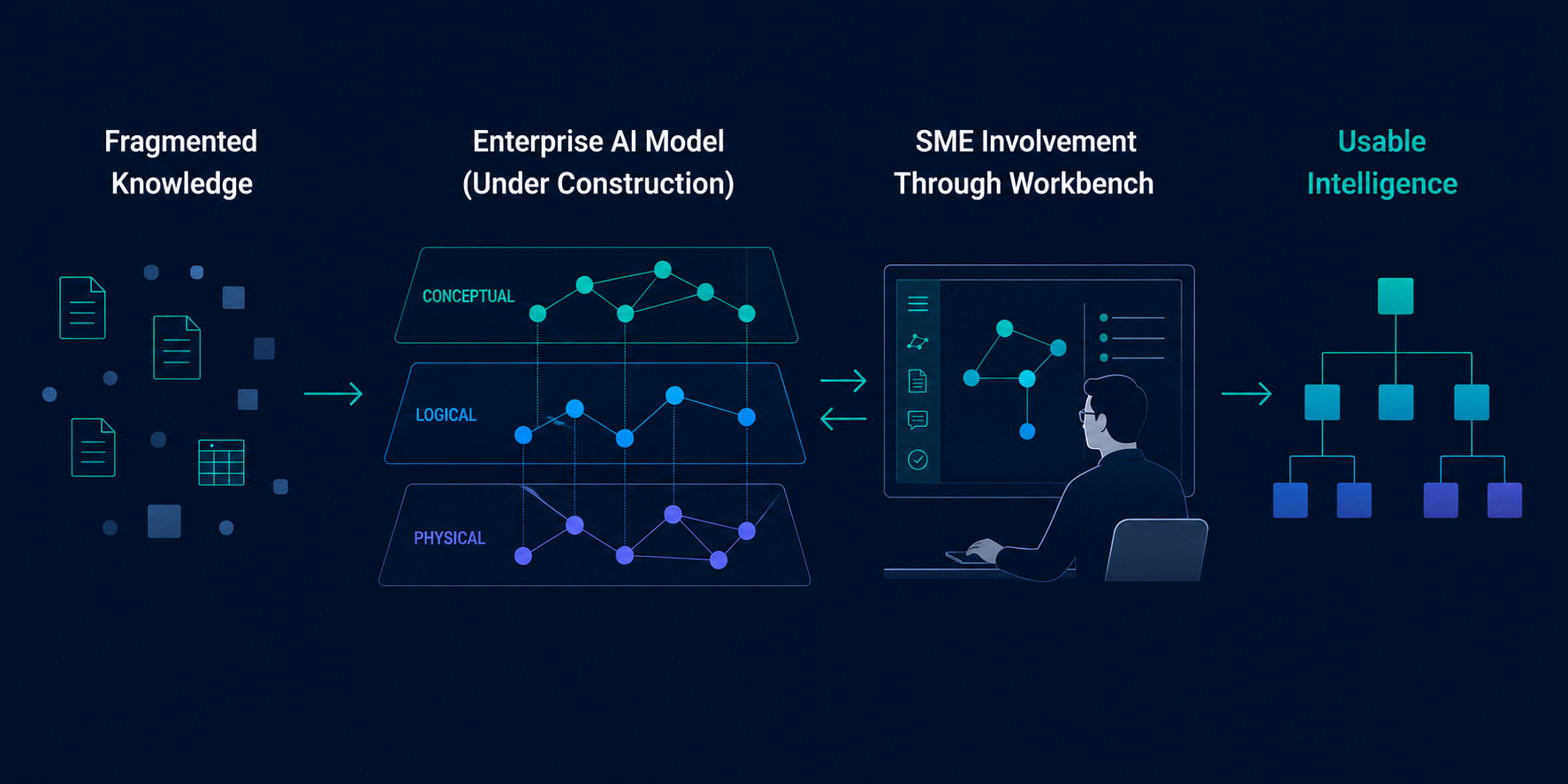
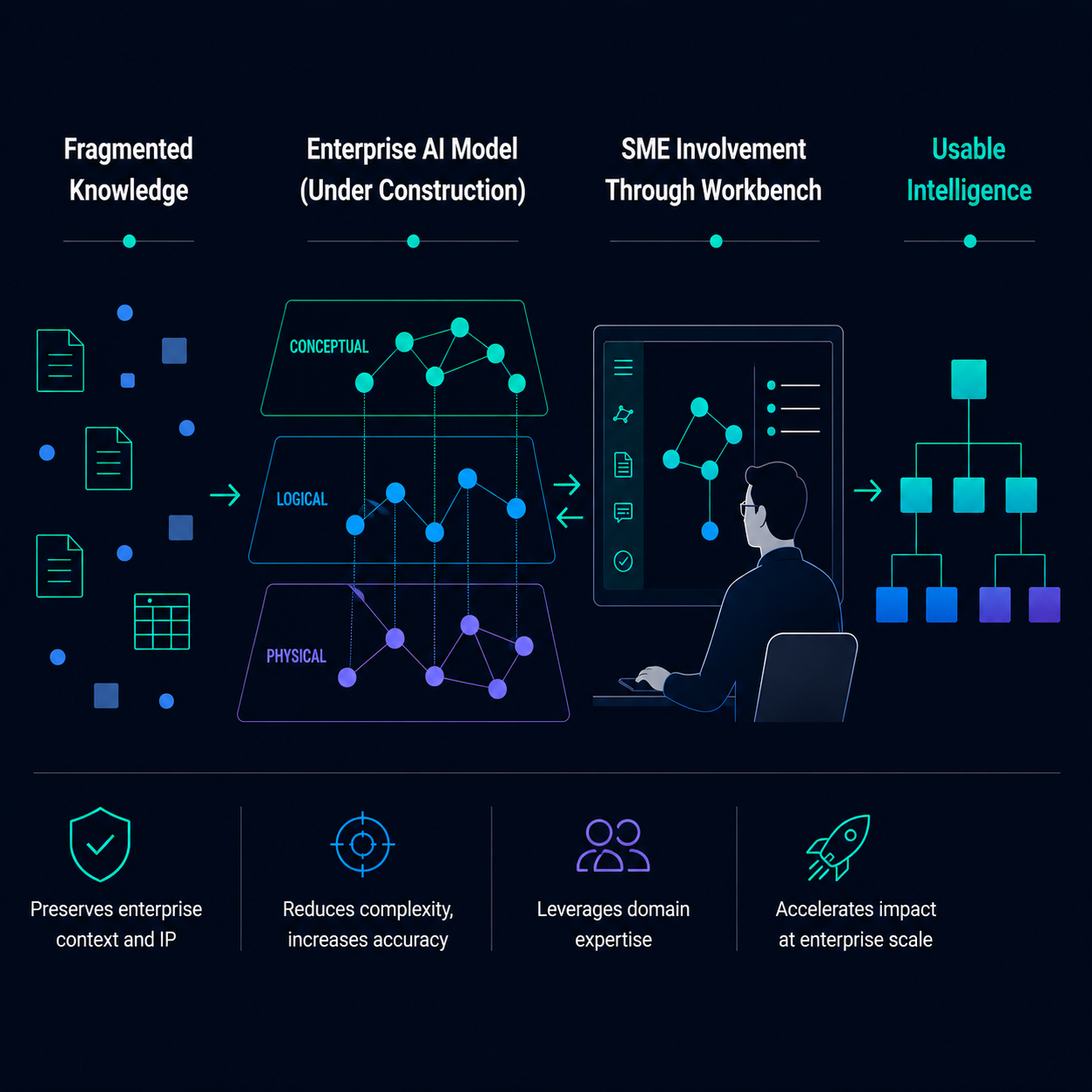
hpad follows a systematic process to transform fragmented knowledge into usable intelligence, with subject matter experts actively involved through the Workbench.
Capture enterprise knowledge
Step 1
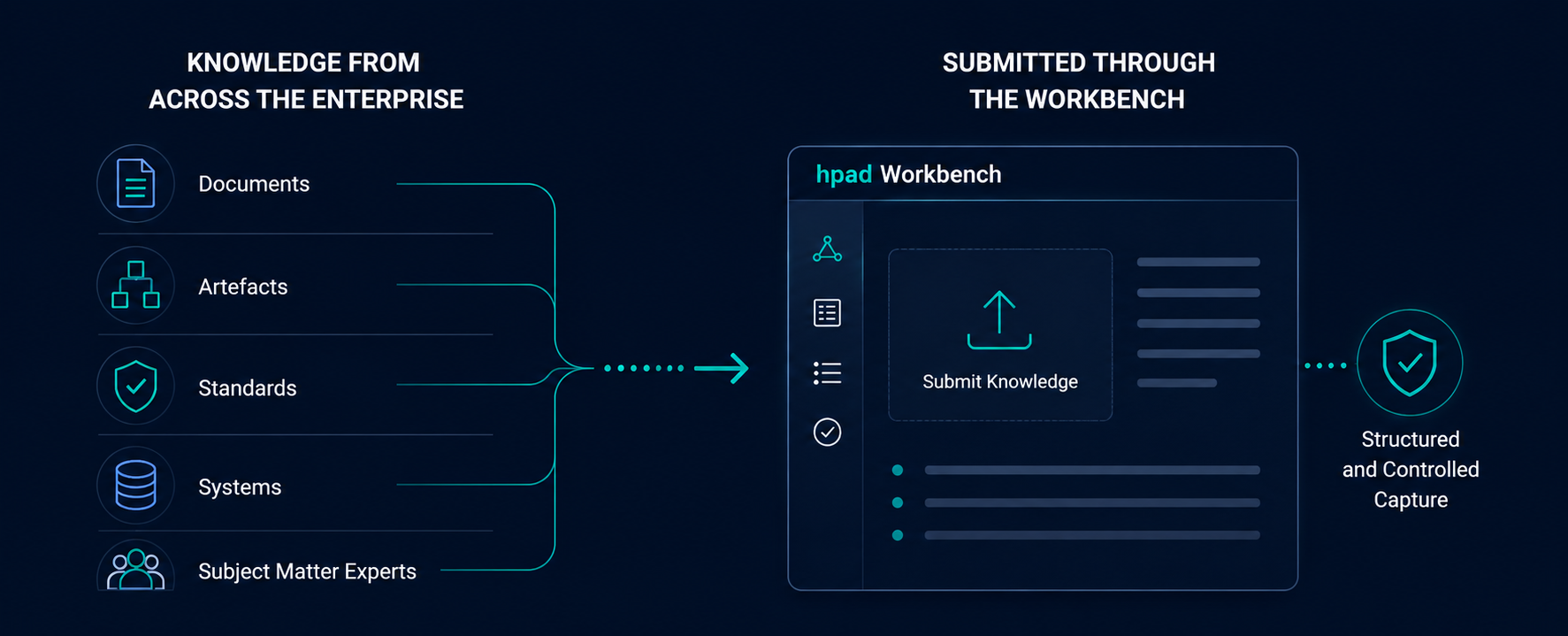
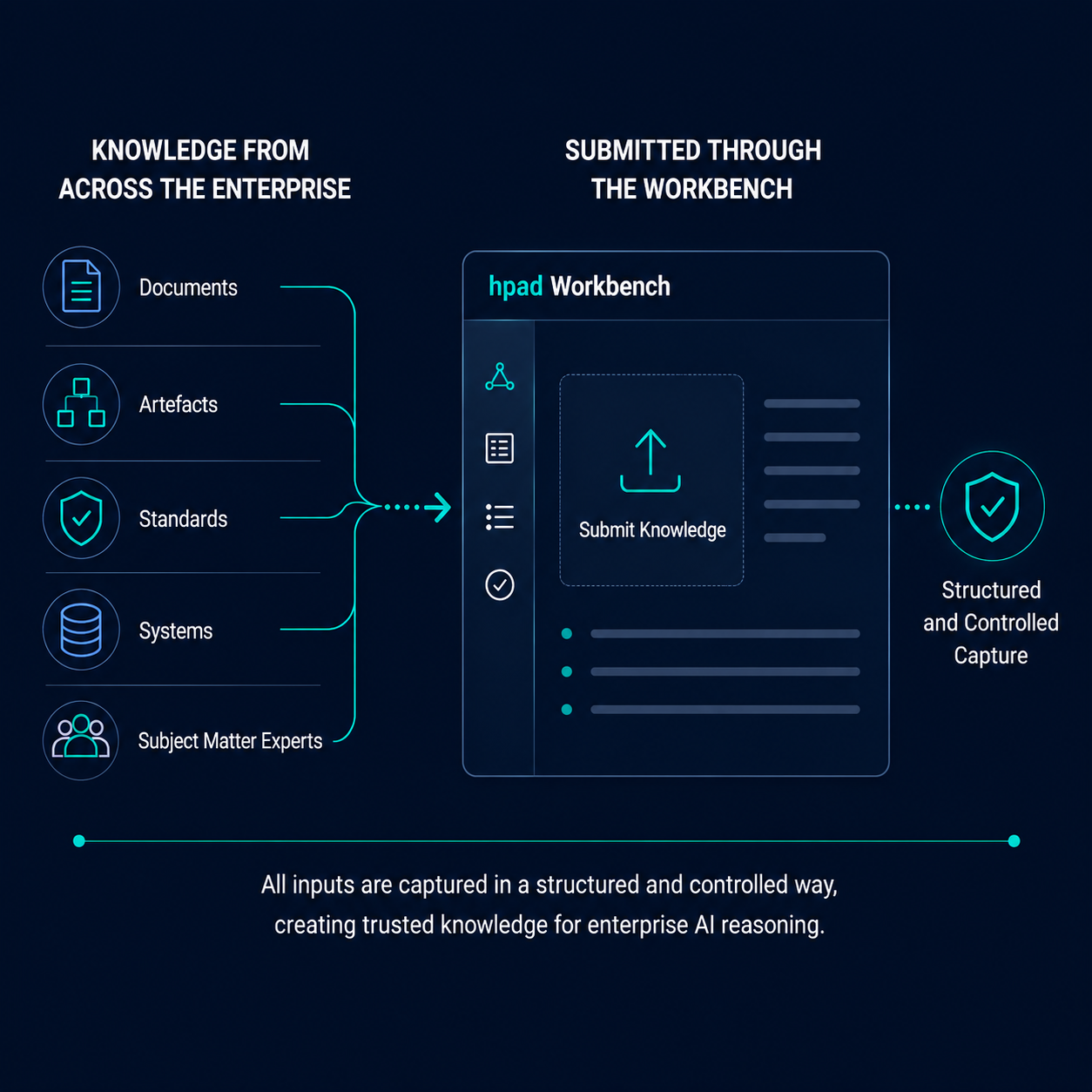
hpad gathers knowledge from across the enterprise, including documents, artefacts, standards, and subject matter experts. These inputs are submitted through the Workbench, ensuring that knowledge is captured in a structured and controlled way.
Structure knowledge and relationships
Step 2
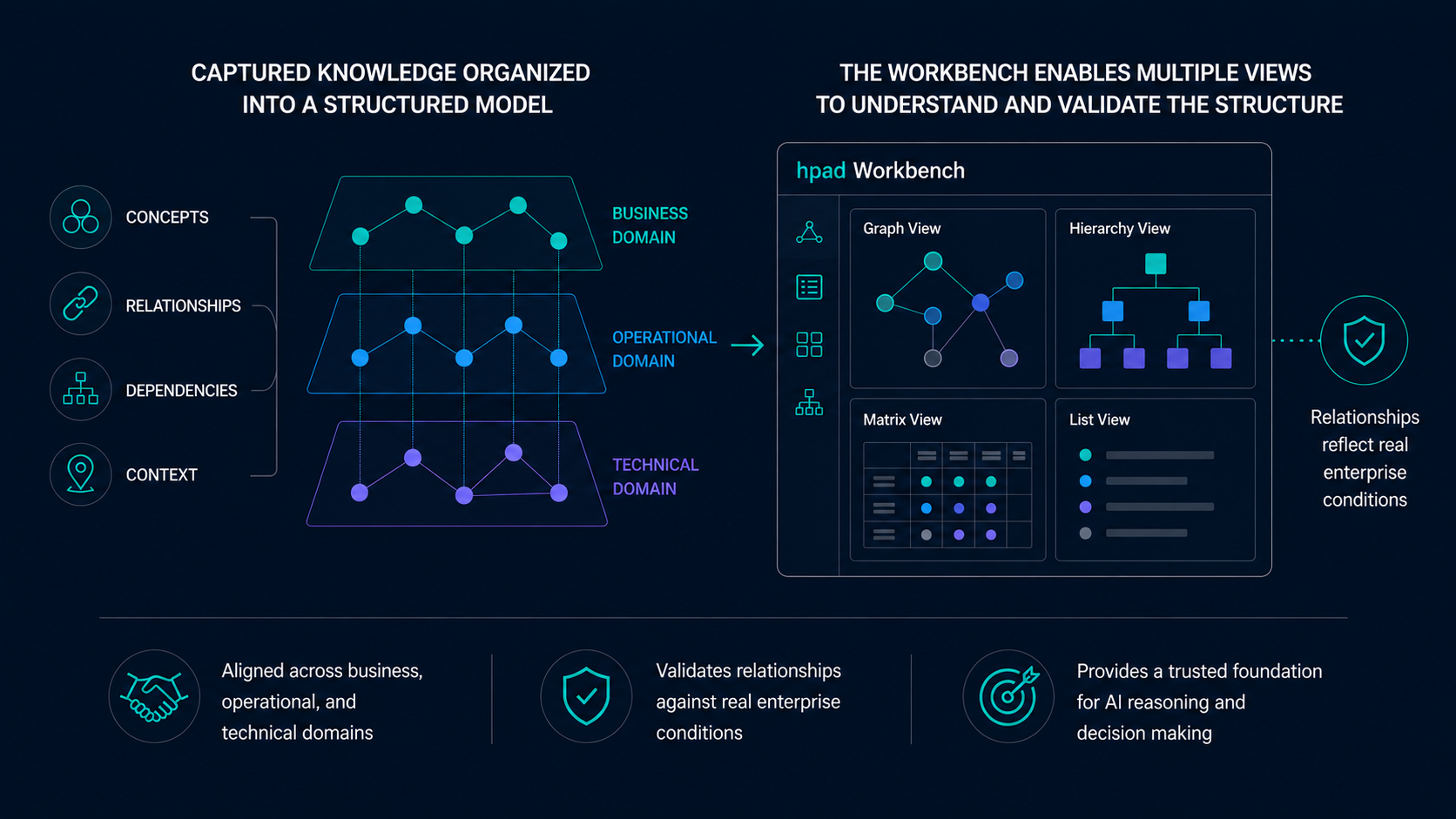
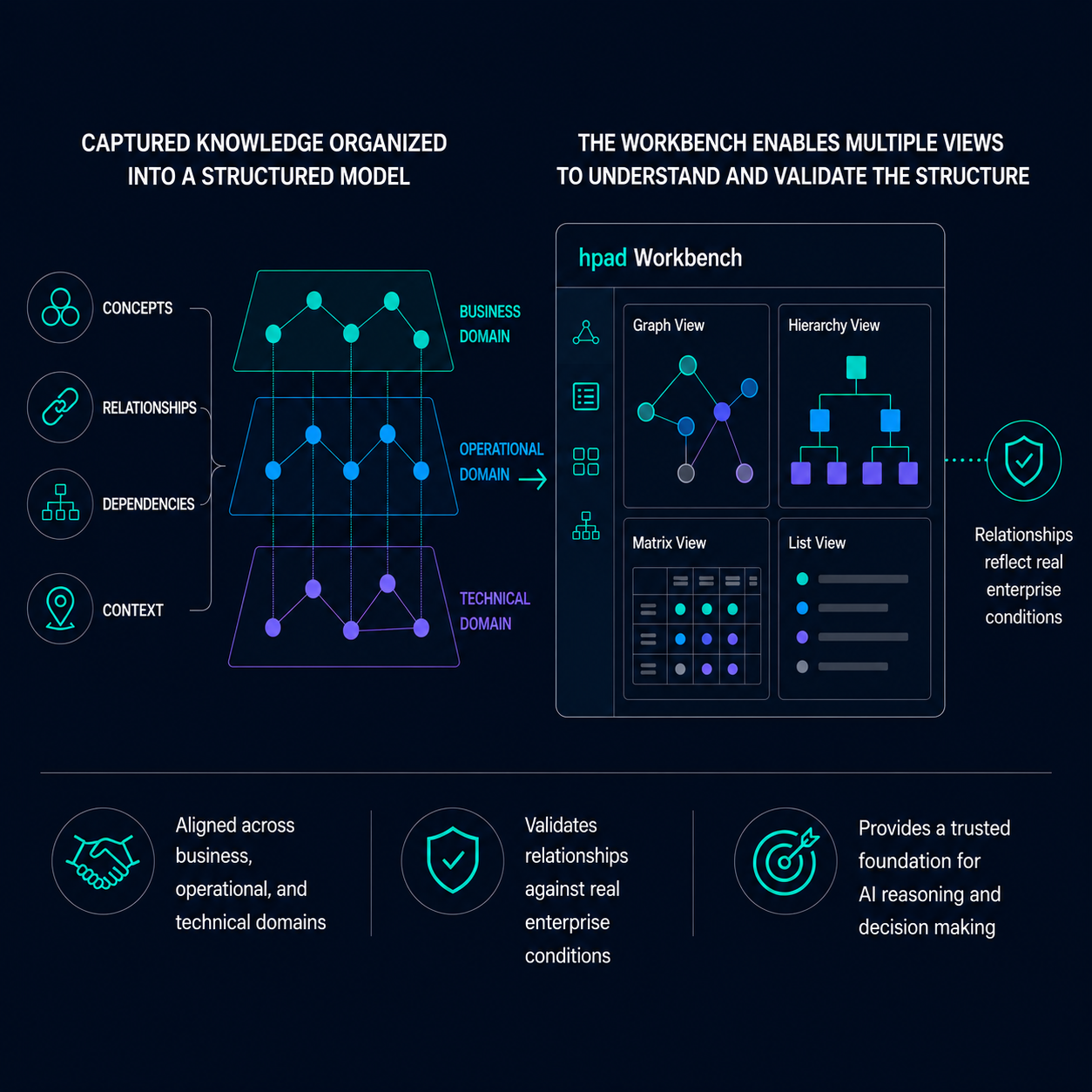
Captured knowledge is organized into a structured model that defines concepts, relationships, dependencies, and context across business, operational, and technical domains. The Workbench enables users to view this structure in multiple forms and ensure that relationships reflect real enterprise conditions.
Encode expert reasoning
Step 3
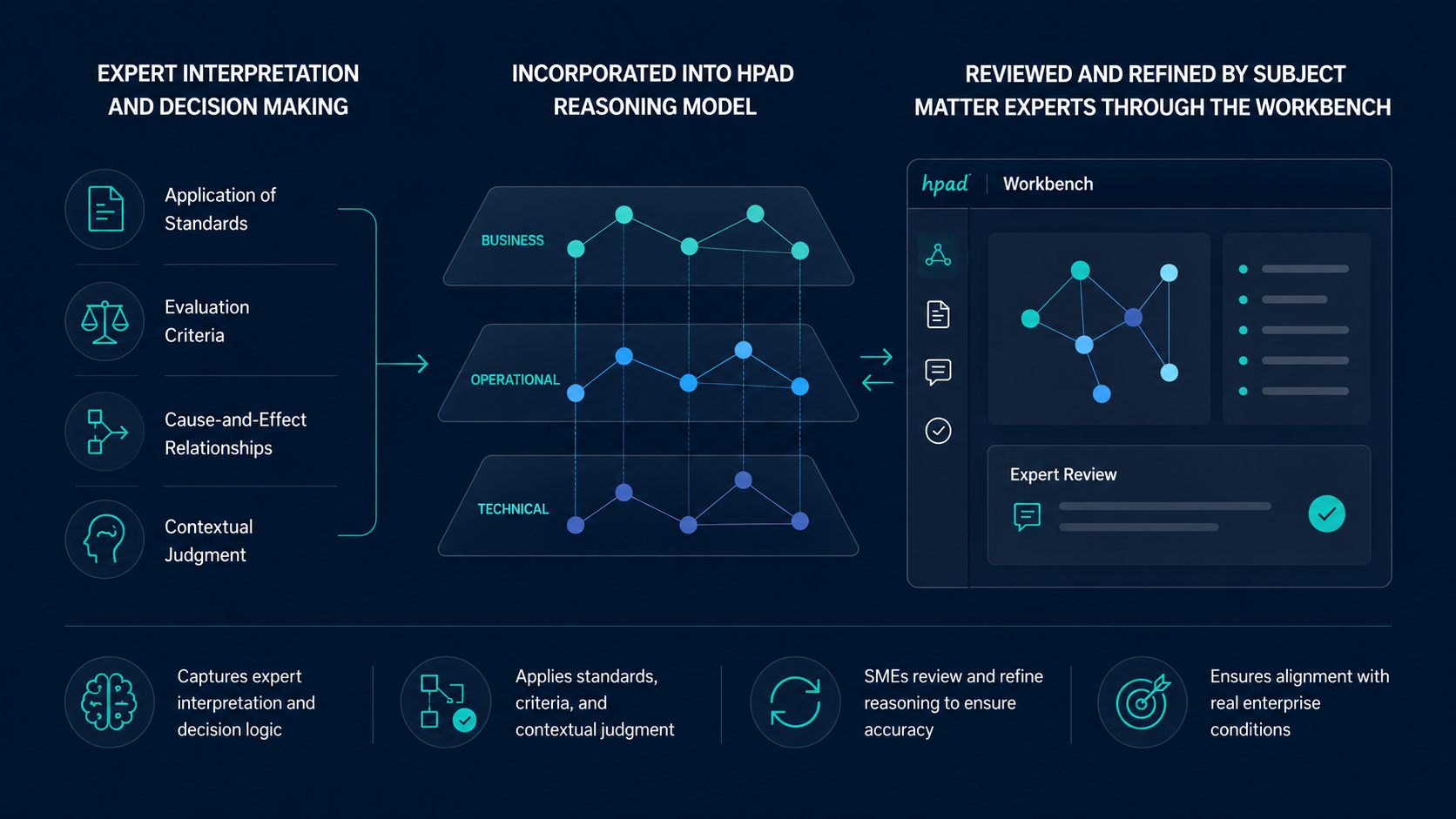
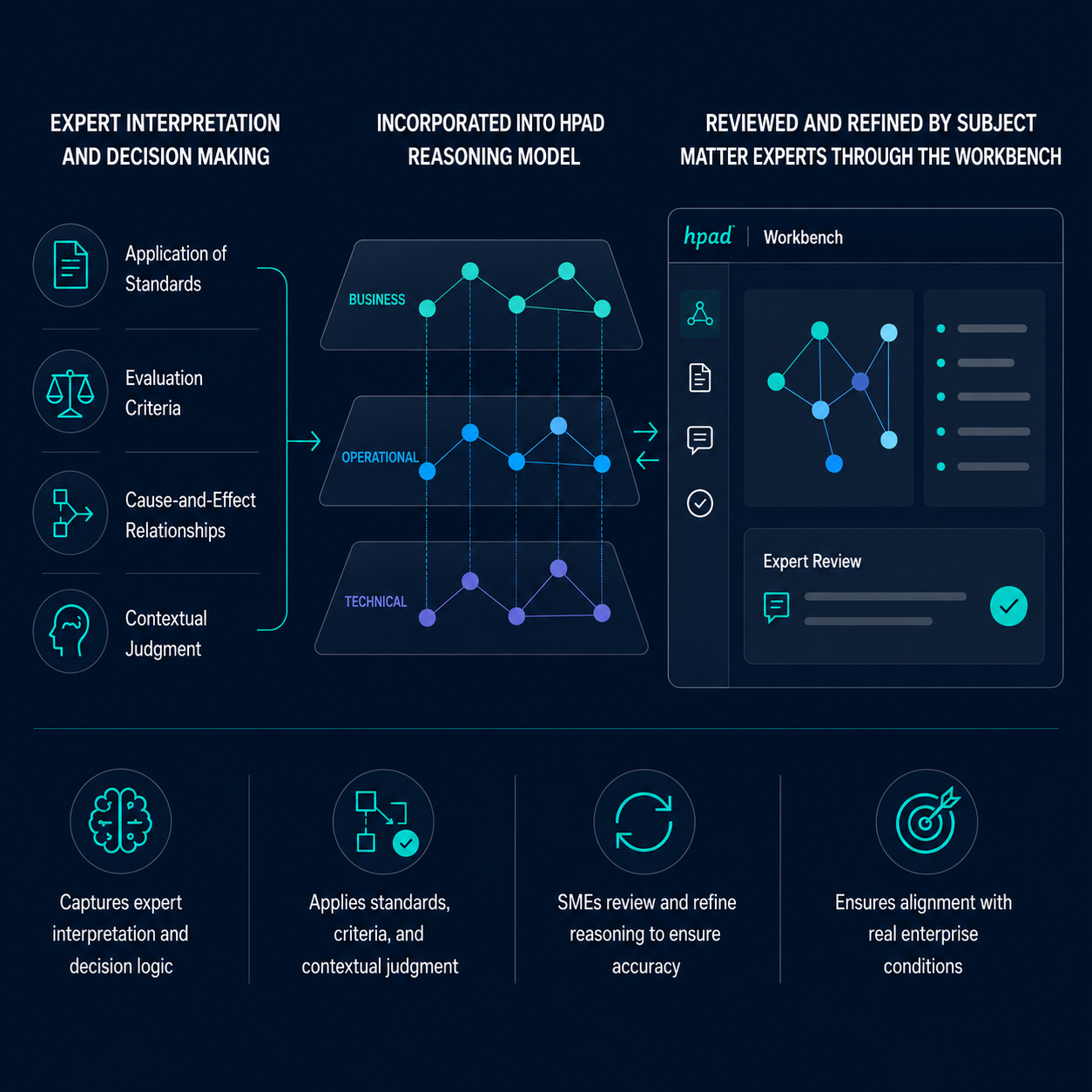
hpad incorporates how experts interpret information and make decisions, including application of standards, evaluation criteria, cause-and-effect relationships, and contextual judgment. Subject matter experts review and refine this reasoning through the Workbench to ensure accuracy and alignment.
Build and validate the enterprise AI model
Step 4
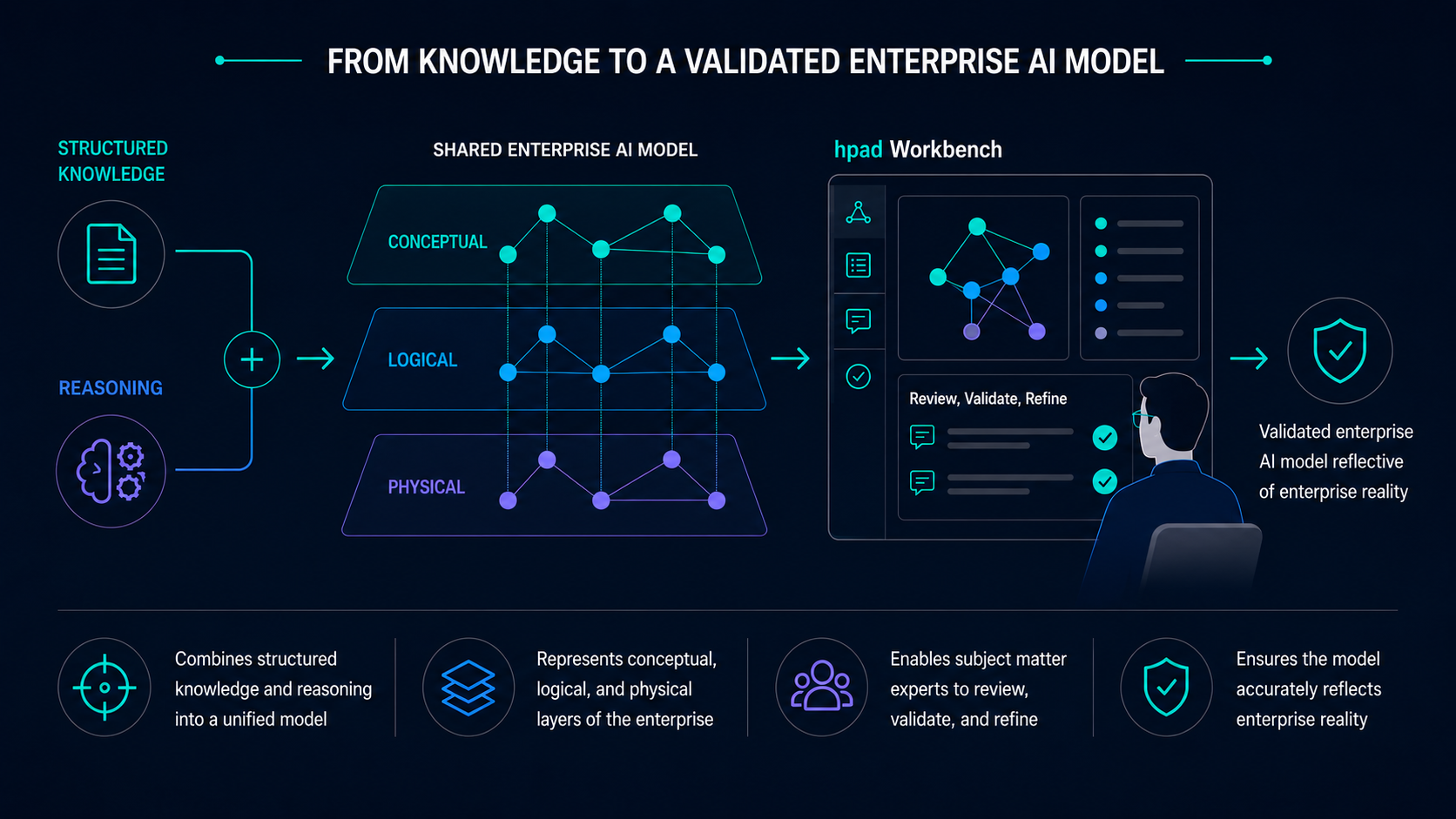
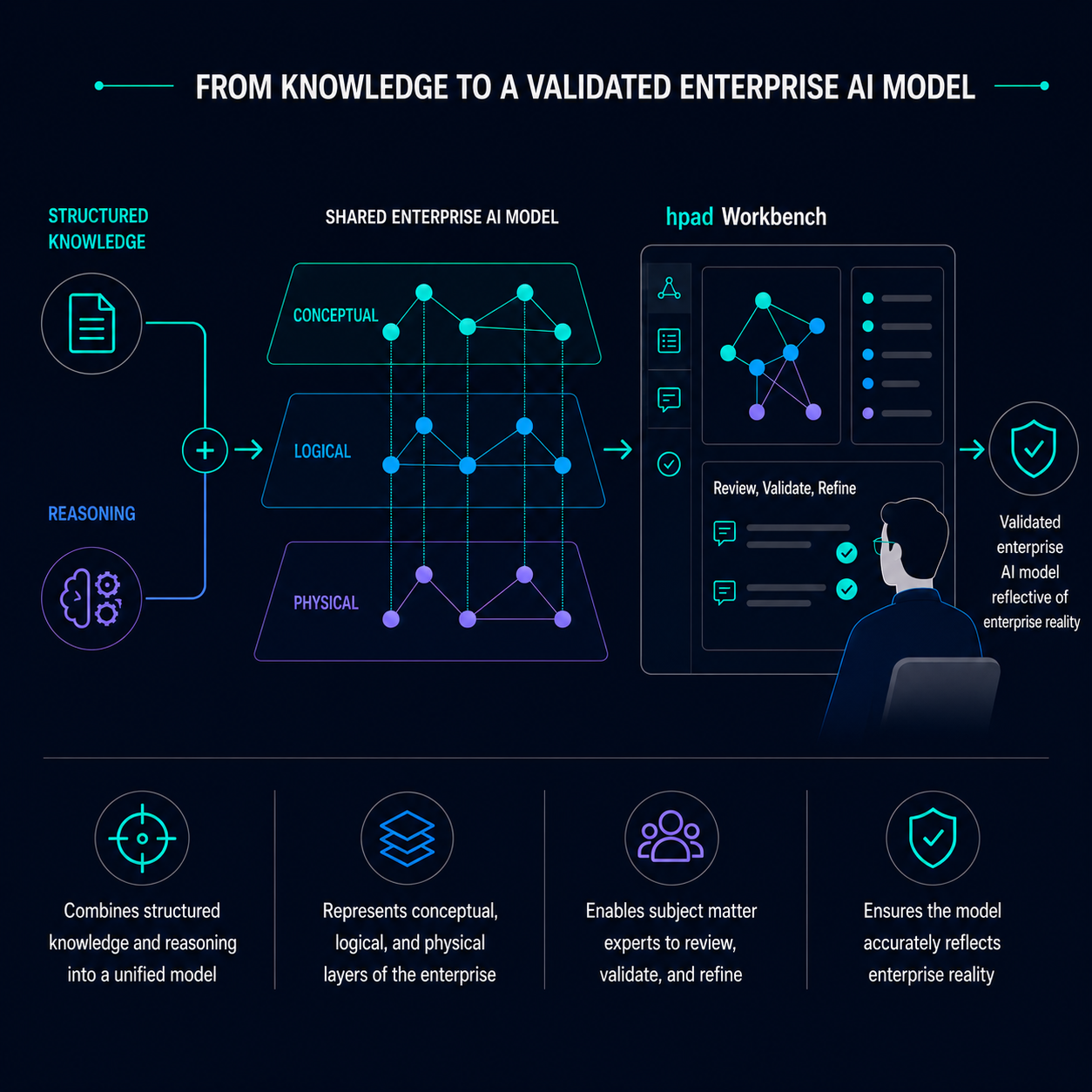
Structured knowledge and reasoning are combined into a shared enterprise AI model representing conceptual, logical, and physical layers of the enterprise. The Workbench is used to review, validate, and refine this model, enabling subject matter experts to confirm that it reflects enterprise reality before it is used operationally.
Configure AI companions
Step 5
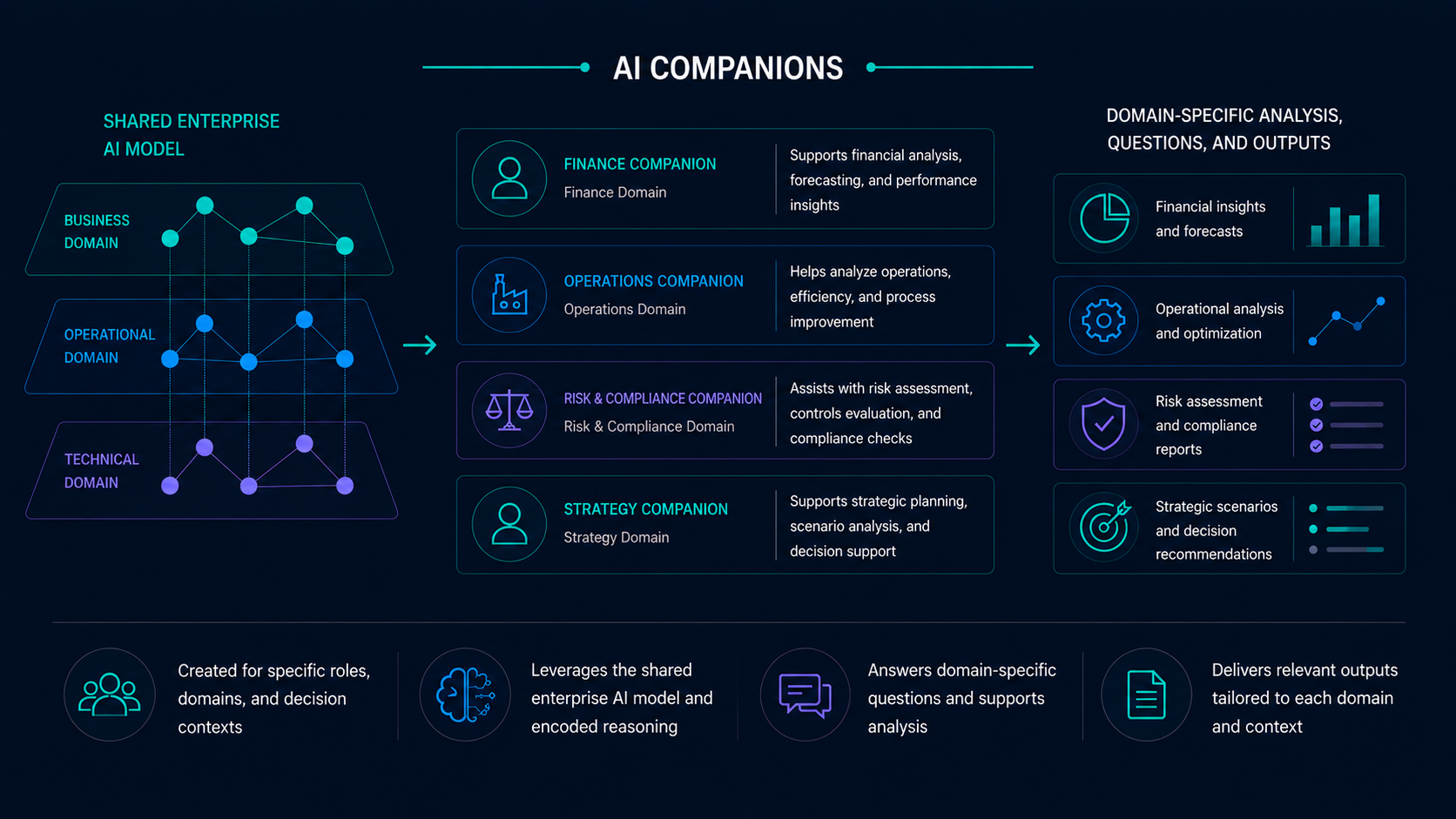
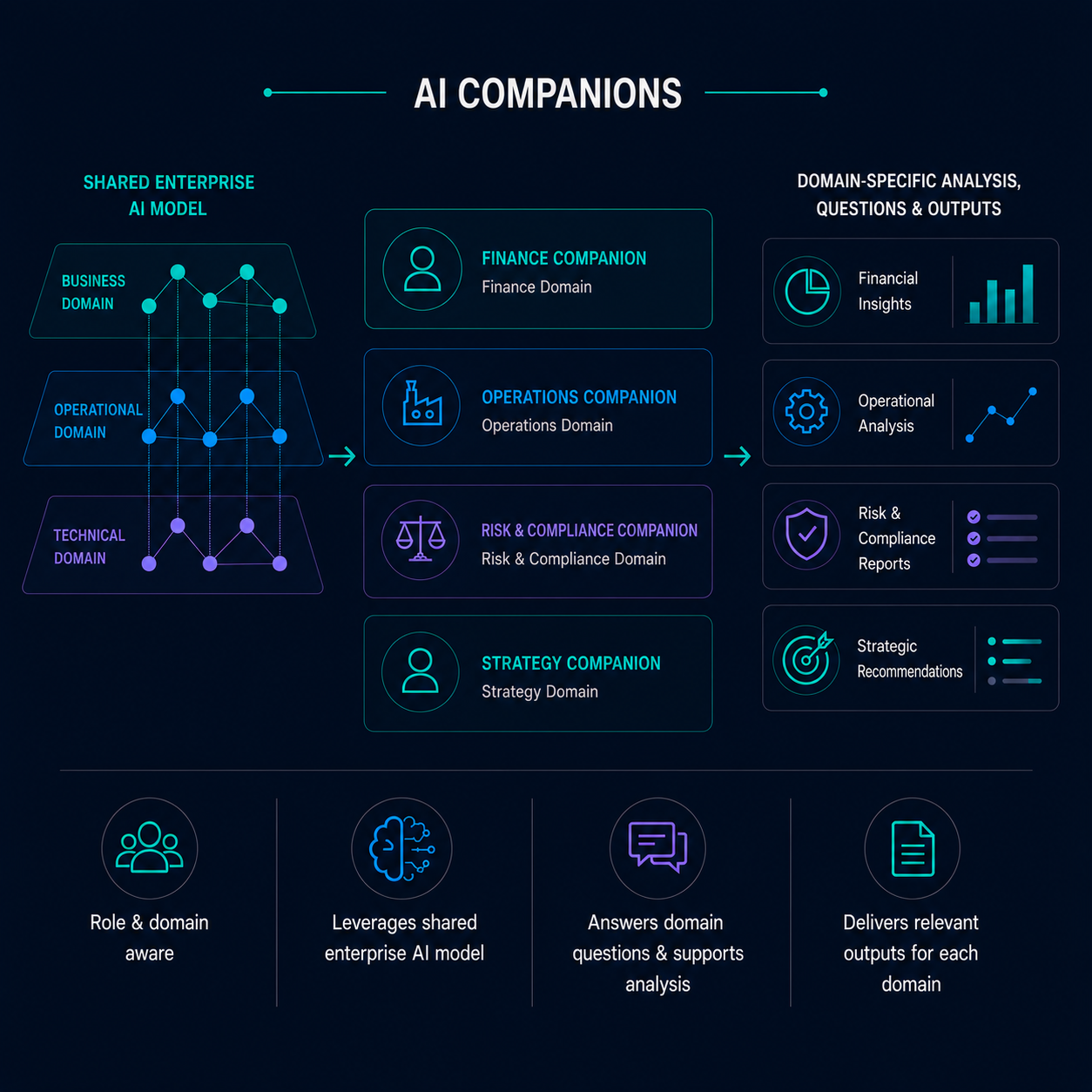
AI companions are created for specific roles, domains, and decision contexts. Each companion uses the shared enterprise AI model and applies the encoded reasoning to support domain-specific analysis, questions, and outputs.
Support decisions and generate outputs
Step 6
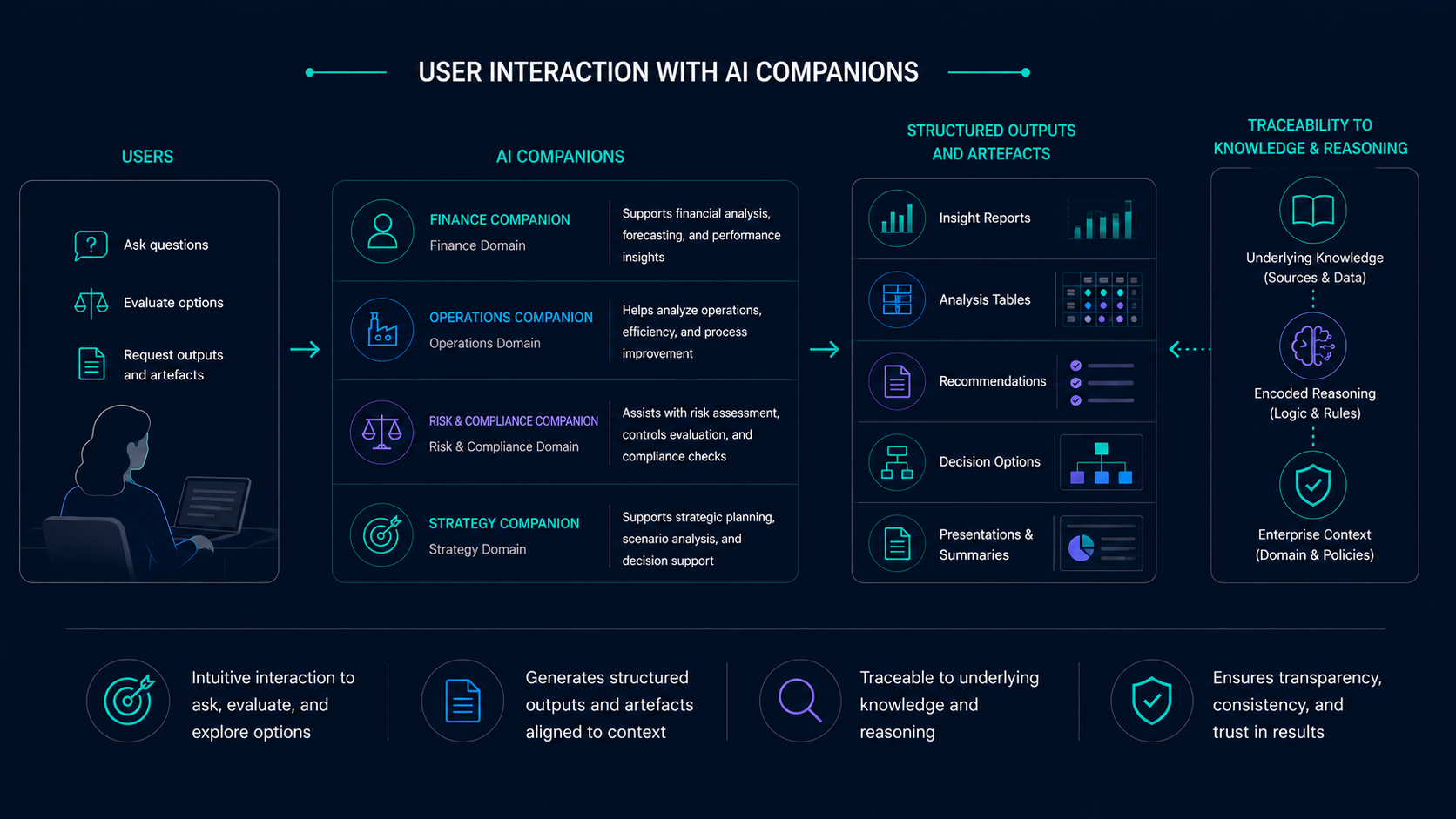
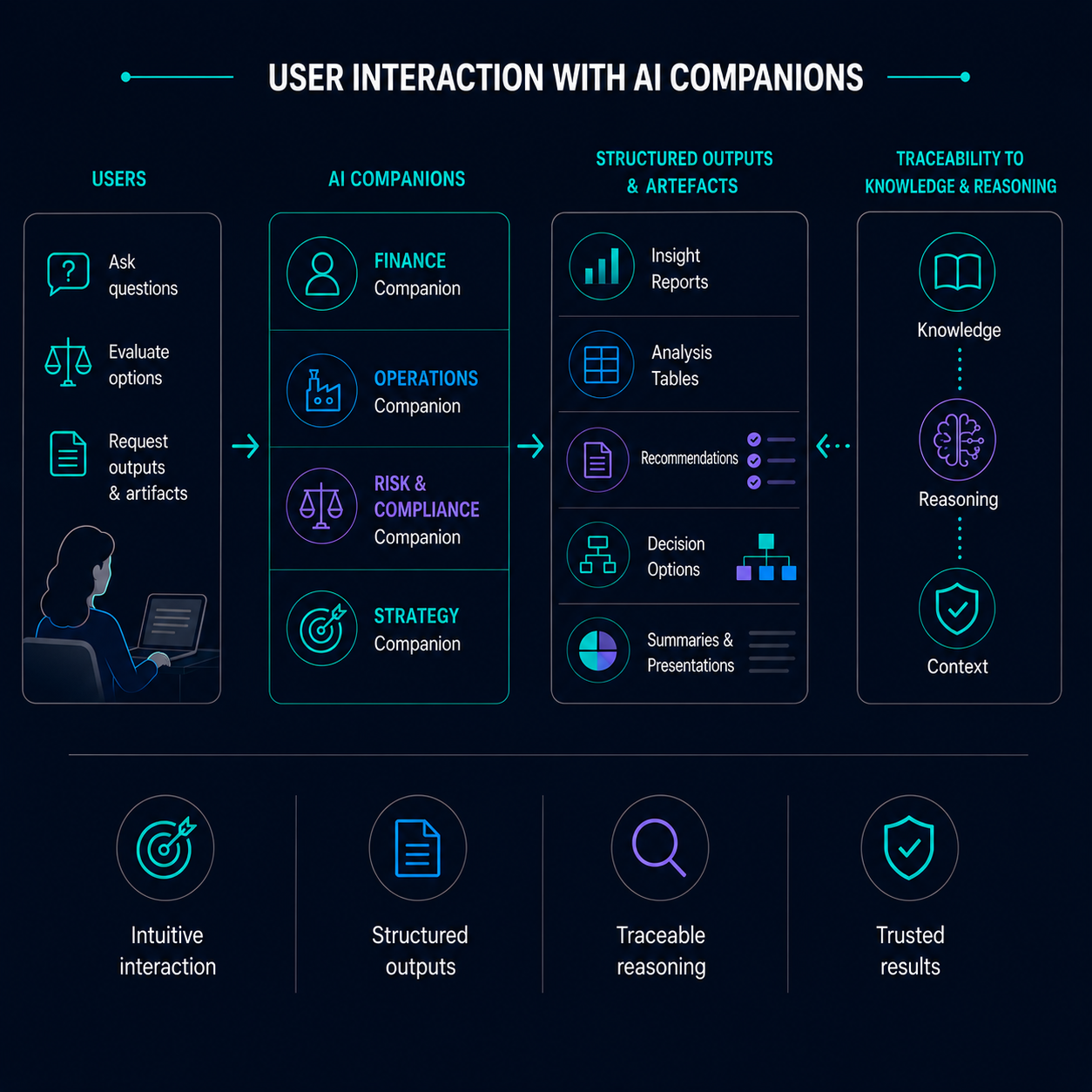
Users interact with AI companions to ask questions, evaluate options, and generate structured outputs and artefacts. Outputs are aligned to enterprise context and can be traced back to underlying knowledge and reasoning, ensuring transparency and consistency.
Continuous validation and refinement
Step 7
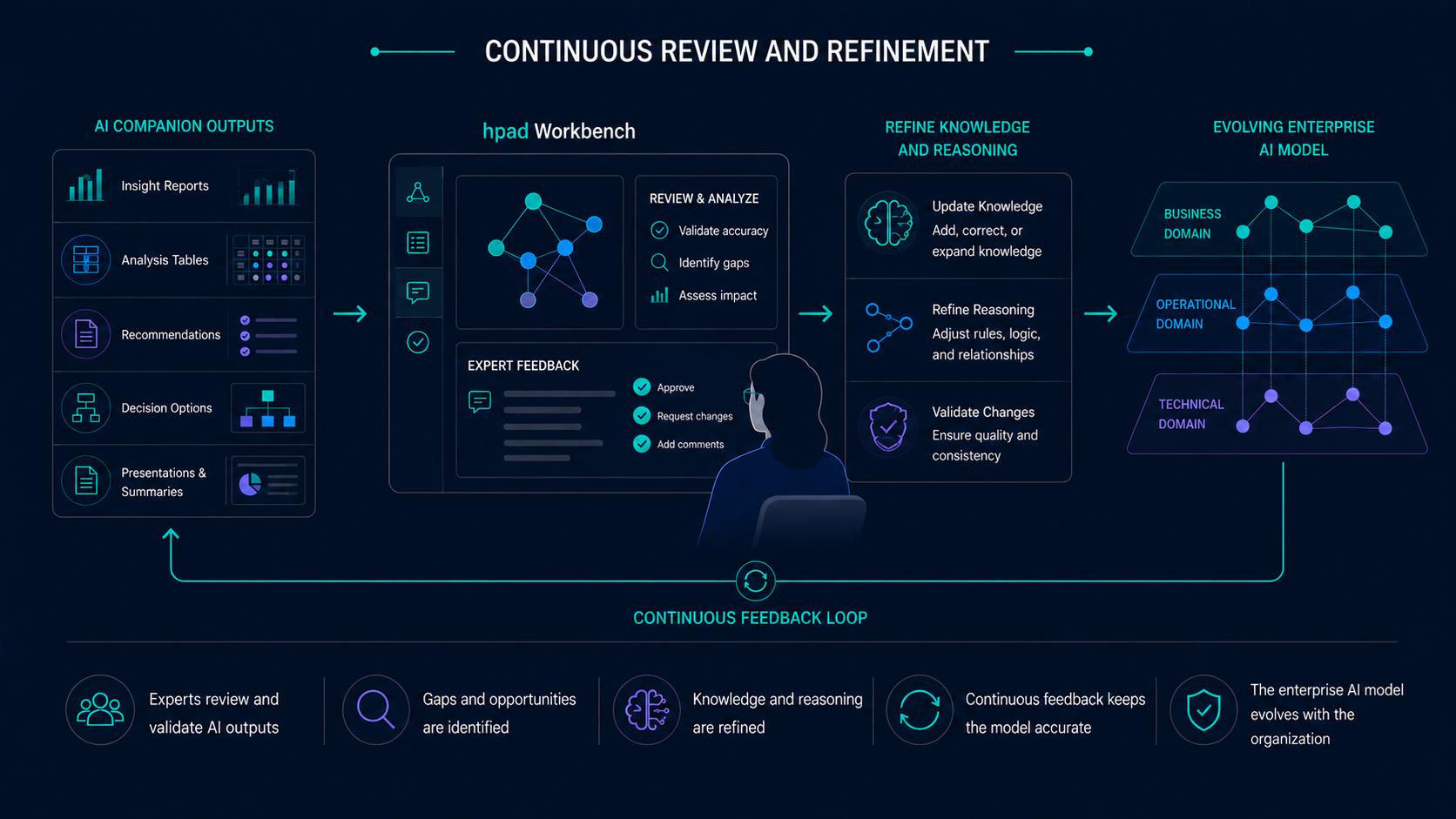
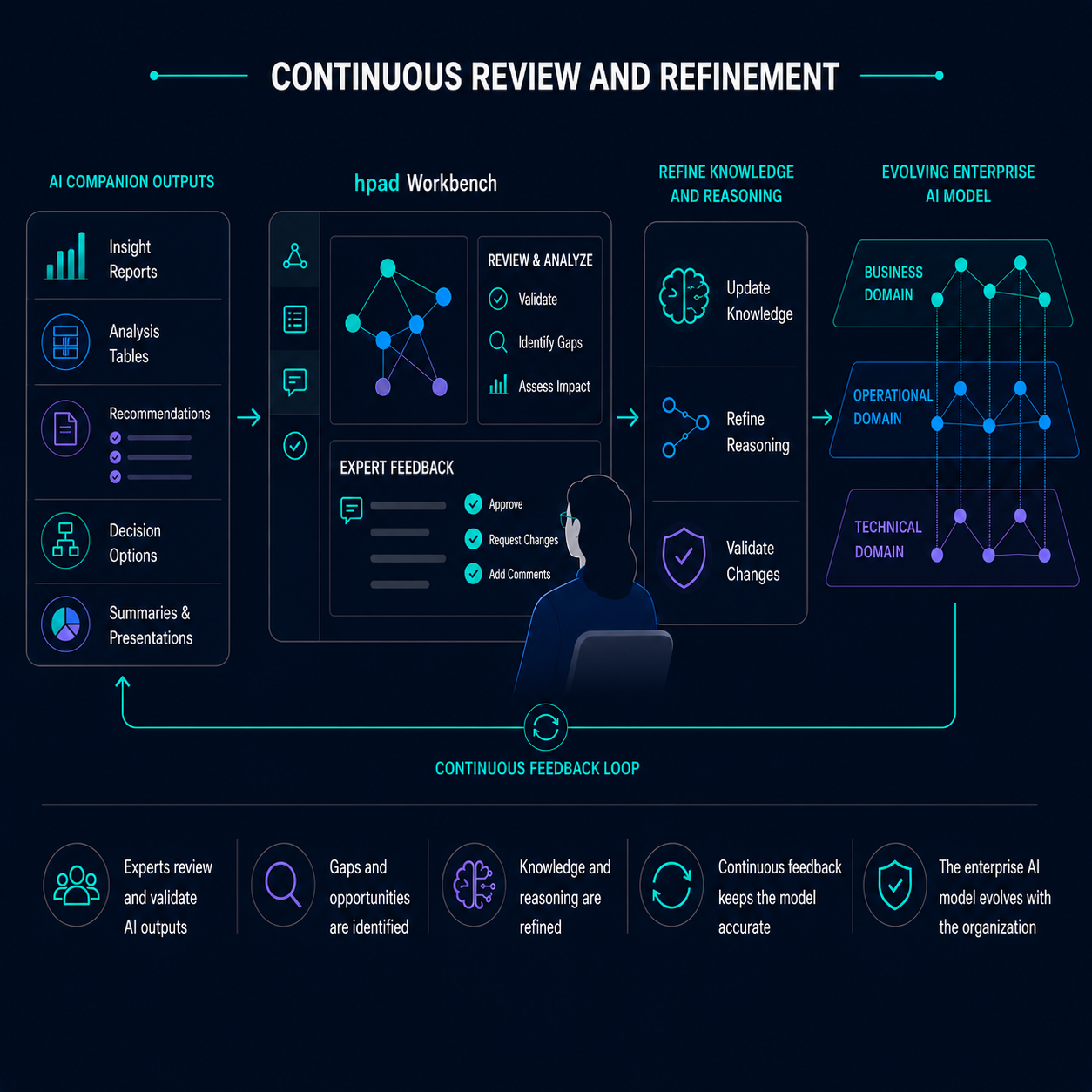
Subject matter experts use the Workbench to review outputs, identify gaps, and refine both knowledge and reasoning. This continuous feedback loop ensures that the enterprise AI model evolves with the organization and remains accurate over time.
Key Components of the hpad Platform
Key Components
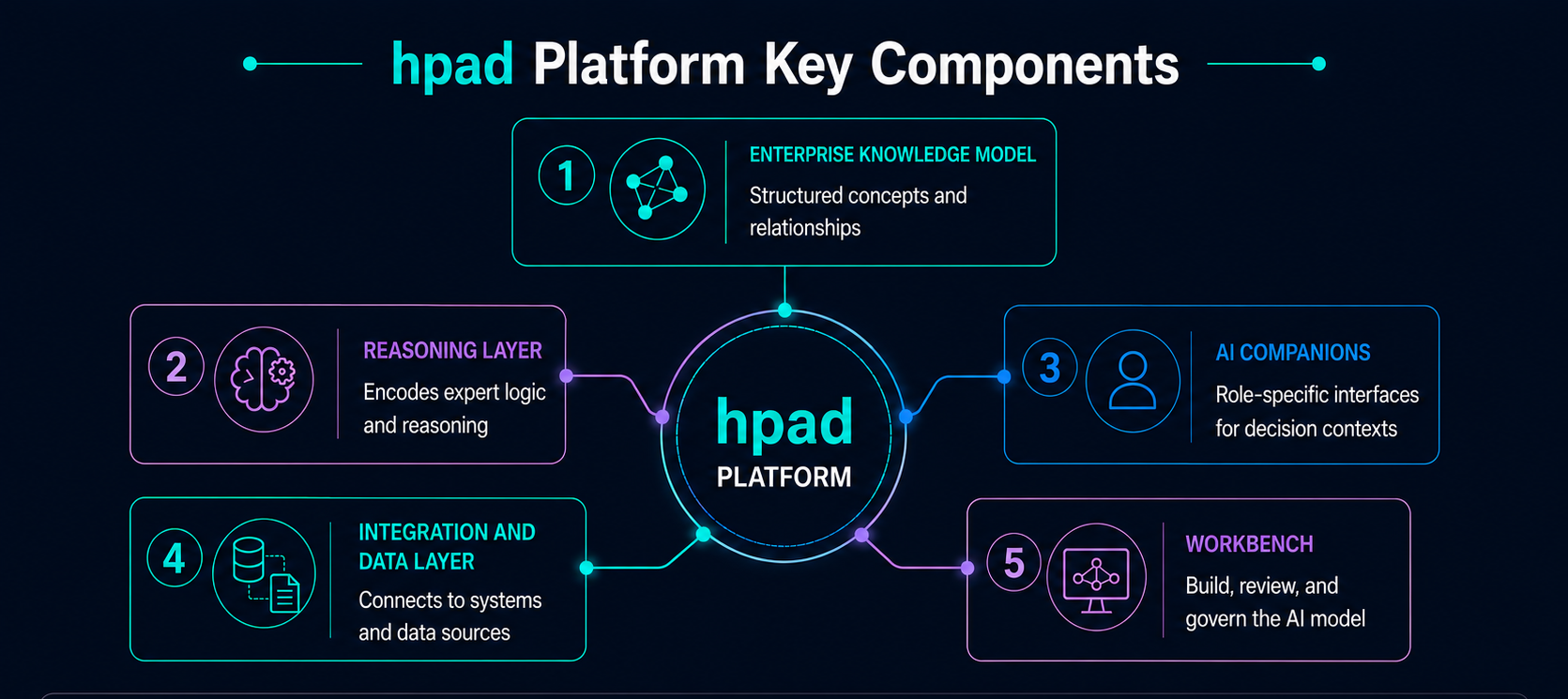
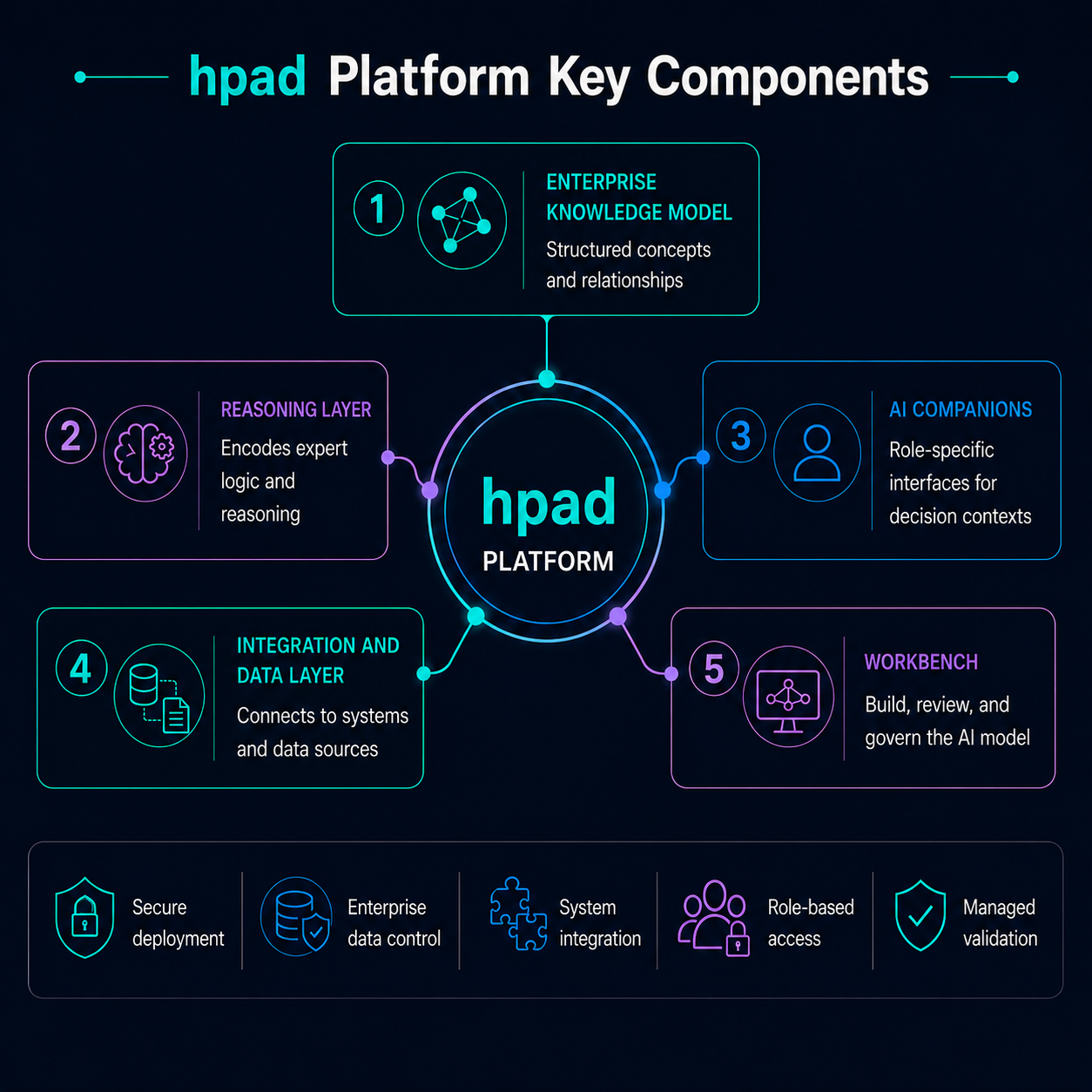
01
Enterprise knowledge model
A structured representation of concepts, relationships, and context across the enterprise, connecting knowledge from multiple sources into a coherent foundation.
02
Reasoning layer
Encodes how experts interpret information, apply logic, and derive conclusions, enabling the AI to support decision-making rather than just information retrieval.
03
AI companions
Role-specific interfaces that allow users to interact with the enterprise AI model and apply it in real decision contexts.
04
Integration and data layer
Connects the platform to enterprise systems, documents, and data sources, ensuring that the AI remains aligned with current information.
05
Workbench
The Workbench is the environment used to build, review, and govern the enterprise AI model. It enables users to submit inputs, interact with the AI during modeling, view the model in structured and visual forms, and refine it through expert validation, ensuring transparency, control, and continuous alignment.
What makes hpad different
Beyond generic AI
hpad is fundamentally different from generic AI tools.
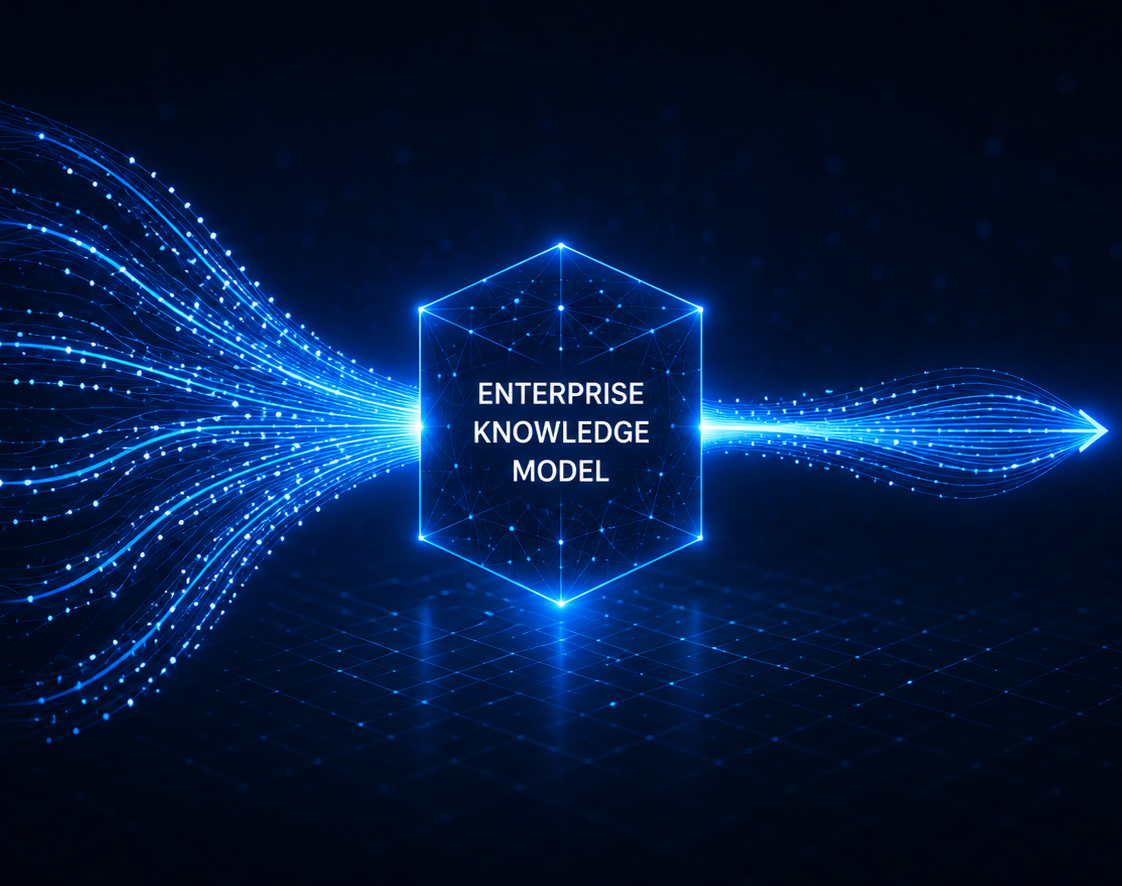
From data-driven to knowledge-driven
Instead of relying only on large datasets, hpad structures enterprise knowledge and relationships.

From answers to reasoning
hpad supports how decisions are made, not just what answers are returned.

From isolated tools to shared foundation
Multiple use cases are built on the same enterprise AI model, enabling consistency and scalability

From black box to traceable outputs
Outputs can be linked back to enterprise knowledge, assumptions, and reasoning paths, with validation supported through the Workbench.
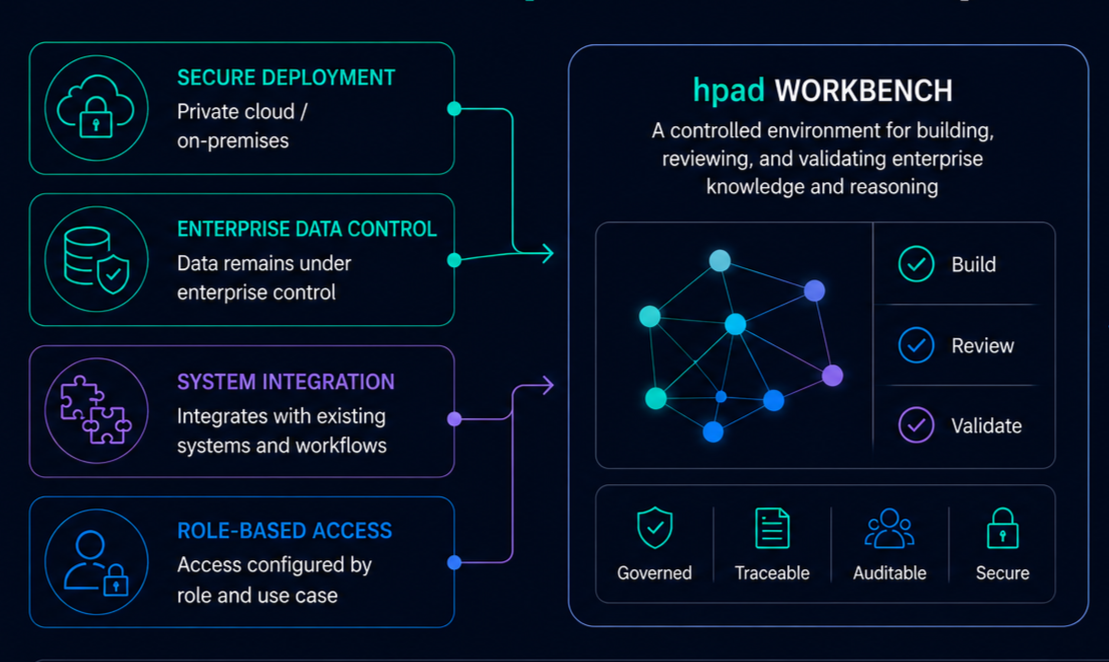
Deployment options include private cloud and on-premises environments
Data remains under enterprise control
Integration with existing systems and workflows is supported
Access can be configured by role and use case
Deployment and Control
Built for enterprise deployment
hpad is designed to operate within enterprise environments that require control, security, and flexibility.
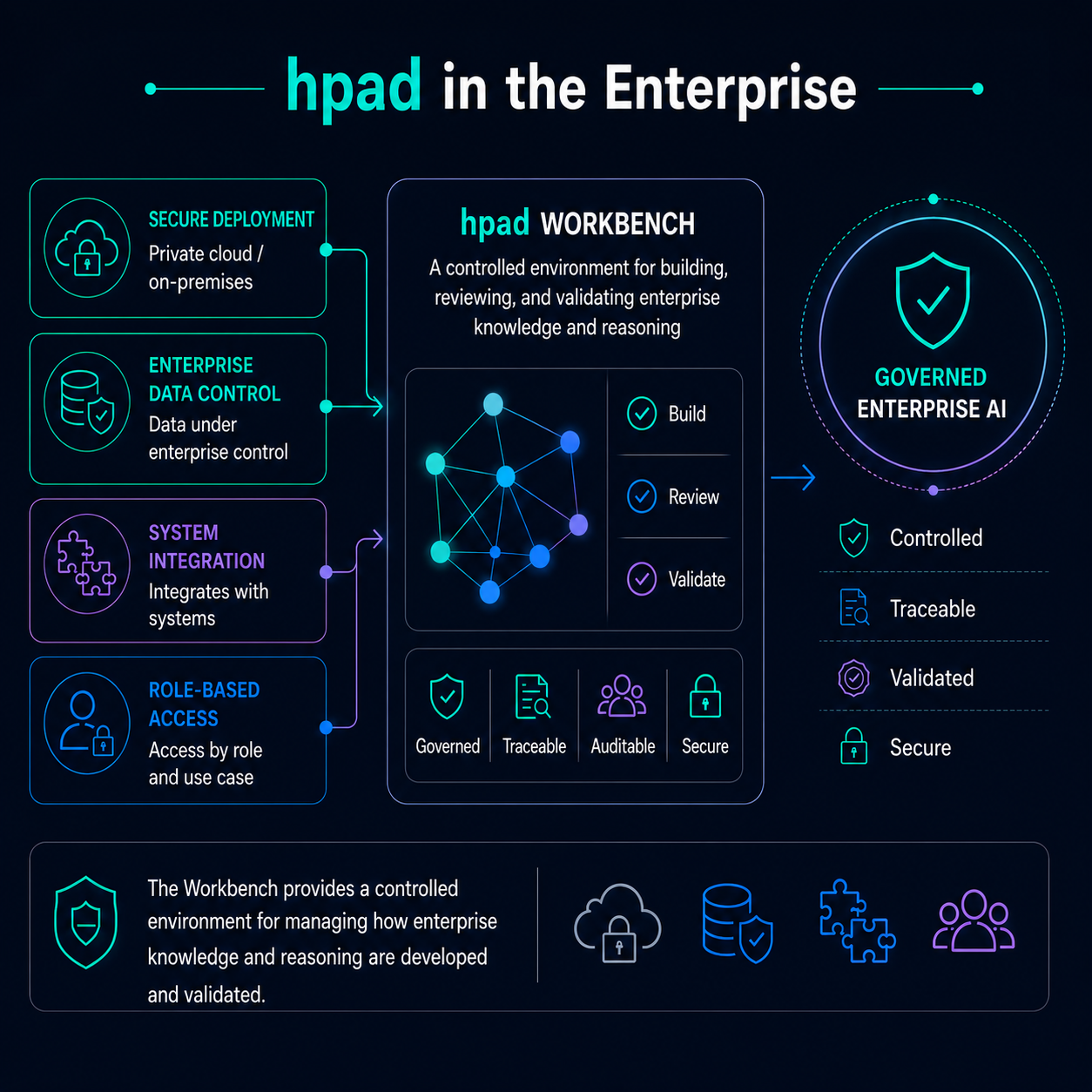
Deployment options include private cloud and on-premises environments
Data remains under enterprise control
Integration with existing systems and workflows is supported
Access can be configured by role and use case
The Workbench provides a controlled environment for managing how enterprise knowledge and reasoning are developed and validated.
The Workbench provides a controlled environment for managing how enterprise knowledge and reasoning are developed and validated.
Continuous refinement with expert feedback
Continuous Learning

hpad supports ongoing improvement of the enterprise AI model through structured expert involvement. Subject matter experts use the Workbench to review outputs, refine knowledge and reasoning, and incorporate new information as the enterprise evolves. This ensures that the AI remains aligned with current knowledge, practices, and priorities.
Build AI that reflects how your enterprise actually works
hpad enables organizations to move beyond disconnected AI initiatives toward a unified approach where knowledge, reasoning, validation, and decision support are integrated across the enterprise.